
Nina Kenwood’s YA debut It Sounded Better in My Head wasn’t even on my radar when I recently picked it up at the bookstore. It was a William C. Morris Debut finalist and had excellent reviews from School Library Journal and Bookpage (I trust those sort of endorsements over author plugs, tbh) so I bought it. It might have languished with all the other unread books in my class library, but I picked it up to read and honestly couldn’t put it down.
Eighteen-year-old Australian, Natalie, is waiting for her university admission results and planning her future with her besties Zach and Lucy, when her parents announce that they are separating. Worse, they knew this was coming and had neglected to tell her for ten months. Some almost-adults might take this in their stride, but it knocks Natalie sideways because she likes solid plans and the status quo. That’s how her world works.
Or that’s how it has worked ever since she hit puberty and her body betrayed her.
I went from being a straight up-and-down stick figure to a scribble of hips, stomach, breasts, thighs and stretch marks. I didn’t even know stretch marks were a thing.
[…]
But the stretch marks were nothing compared with the pimples. A regular scattering of pimples at first, and then more, and more. Then pimples that turned, almost overnight, into deep, cystic acne. […] It’s gross. I was gross. I woke up thinking that every day for a long time.
I suspect we can all remember the awkwardness of being a teenager, of comparing yourself to others, and Natalie spends most of her early teens friendless and hiding out. At thirteen, she becomes “Reluctant Natalie. Anxious Natalie. Bitter Natalie. Neurotic Natalie.” At fifteen, though, after medication clears up her skin a little and her mother convinces her to attend a creative writing camp, she meets Lucy and Zach.
It’s still hard for Natalie to put herself out there, but all that is about to change when Zach’s older brother, Alex, and his friend, Owen, invite her to a party and Natalie surprises herself by accepting. When Alex and Natalie find themselves in a dark alley because of a game of Spin the Bottle, Natalie finds herself in uncharted water.
And the whole thing is sheer delight. Honestly, I loved Natalie. Let’s face it, it’s only as an adult looking back that your teen years seem even mildly awesome. The best years of your life, my ass. I suspect Natalie speaks for a whole bunch of teens who breathe a sigh of relief when Friday night rolls around. For Natalie it meant that she didn’t “have to go outside or see anyone other than [her] parents for the next two whole days.”
Over the course of just a few days, Natalie’s life is upended, but sometimes that’s what needs to happen in order to get the life you want.
Highly recommended.

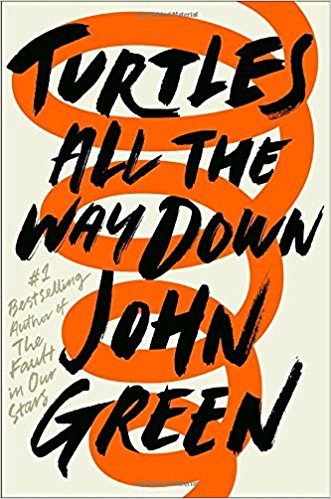 I have a deep and abiding love for John Green. He’s a passionate advocate for reading and learning. He makes nerdish pursuits cool and I think he’s a terrific writer. Lord knows, I was a sobbing, snotty mess at 2 a.m. finishing
  Pam Smy’s lovely hybrid novel tells the story (in words) of Mary and (in pictures) Ella – two girls separated by twenty-five years. Ella and her father have moved into a house that looks out onto Thornhill Institute which was “established in the 1830s as an
 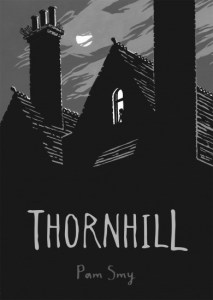 orphanage for girls” and sold in 1982 “after the tragic death of one of the last residents, Mary Baines.” For the last twenty-five years, the house has remained vacant, although plans have been made to develop the site.
 In the present day, Ella spends much of her time alone, too. Her father, who clearly seems to love her, is away a lot. Her mother is presumably dead. Ella is curious about the house she can see from her bedroom window and the girl she sometimes glimpses in the overgrown garden behind the walls
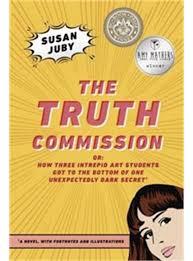 is a celebrated graphic novelist, whose series Diana: Queen of Two Worlds, tells the story of “a suburban girl who lives with her “painfully average” family which includes her high-strung easily overwhelmed mother, her ineffectual father, and her dull-witted, staring lump of a sister.”
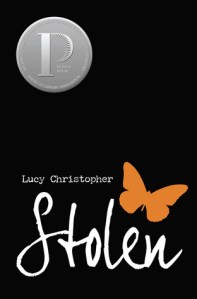 This encounter is the beginning of Gemma’s journey in Lucy Christopher’s debut novel Stolen. Before Gemma has even realized what’s happening, the man is buying her coffee, introducing himself as ‘Ty’ and engaging Gemma in a conversation that makes her feel “grown-up, sitting there with the most handsome man in the café, drinking a coffee he had just bought for me.”
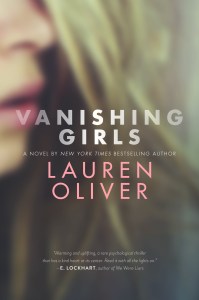 able, folks.
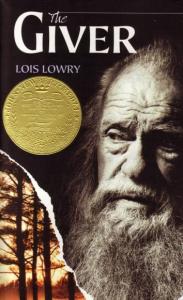 The Giver takes place in a community that values Sameness. On the surface it might even appear like a Utopia. Eleven-year-old Jonas lives in a family unit lives with his younger sister, Lily, and his mother and father. None of them are biologically connected. His life is structured around school and volunteering and ceremonies that mark the important moments in the lives of the citizens. He is apprehensively waiting the next ceremony. His mother tries to calm Jonas’s nerves by telling him
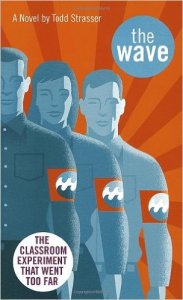 talk, too. The book is based on the true story of California history teacher Ron Jones’ social experiment. (He’s been renamed Ben Ross in this book.) The year was 1969 and Ross had just shown his senior class a film about the Holocaust. When one of his students asked how the Germans could have just sat back and let the Nazis do what they did, Ross tried to think of a way he could illustrate the power of a fascist movement. He came up with “The Wave” and began to teach his students about discipline, community and action. Although the experiment was meant to be short-lived, it grew to include a salute, slogans and even a secret police force before it was finally dismantled due to complaints from parents and colleagues.
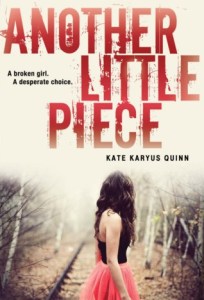 A teenage girl wanders out of a field, her feet “bare and bloodied” tugging at the “garbage bag she’d refashioned as a poncho.” She doesn’t know who she is or where she is. It turns out she’s Annaliese, missing and presumed dead for the past year.
 The Ludic Reader