Chasing Boys – Karen Tayleur

Chasing Boys is the story of Ariel, El for short, who has moved from her swanky school and big house to a new school and an apartment with her older sister, Bella, and her mom. Dad – whereabouts unknown, but clearly he’s left a void in Ariel’s life which she is in desperate need of filling. So, there’s this boy. His name is Eric and he’s a star basketball player and practically the most perfect boy at school. Everyone has a crush on him, but he has a girlfriend. And not just any girlfriend, but the popular and pretty (and, as it turns out, decent and nice) Angelique.

So, is Karen Tayleur’s first YA novel anything more than your standard girl chases boy teen romance? Well, no and yes. For starters, El is a likeable character and the first person narration is swiftly paced and often quite funny. El is smart and attractive, but doesn’t really feel like she fits in anywhere other than with her two best friends, Desi and Margot. She’s also trying to work through abandonment issues and for that she meets with a therapist, Leonard, once a week. The thing is, she can’t actually talk to Leonard.  “If I was talking to Leonard,”  she muses, “which I am not, I would ask him a question.”

Eric isn’t the only boy orbiting El’s life. There’s also Dylan.

Dylan slumps in the seat and glances at me. I realize he’s the newest guy at school and I give him my catatonic stare – the one I use when I want the other person to look away. It’s usually pretty effective. He has a thin white scar, almost invisible, that travels from his bottom lip and disappears under his chin, and just for a moment I wonder how it got there. His lips curl into a sneer and I look straight ahead.

El tries to balance school and home and her crush on Eric and Dylan’s passive-aggressive interference in her life with varying degrees of success.  For the teen reader who is looking for a book that is entertaining and not particularly challenging, Chasing Boys will likely fit the bill.

The Year of Magical Thinking – Joan Didion

Joan Didion’s well-regarded memoir The Year of Magical Thinking recalls the year following the death of her husband and writing partner John Gregory Dunne. Didion and Dunne were married for 40 years and were literary royalty. They counted many other famous writers and celebrities among their friends. It would seem that theirs was a charmed life. John Gregory’s famous brother, Dominick, writes about his brother’s death here.

“Life changes fast. Life changes in an instant,” Didion writes. And while we certainly all know this is true, Didion experiences it first hand at a particularly trying point in her life.

She and her husband have just returned from the hospital where their only daughter Quintana is recovering from a particularly virulent flu. They’ve just sat down to dinner  when Didion looks up from her salad and sees him slumped over the table.

I have no idea what subject we were on, the Scotch or World War One, at the instant he stopped talking.

I only remember looking up. His left hand was raised and he was slumped motionless. At first I thought he was making a failed joke, an attempt to make the difficulty of the day seem manageable.

I remember saying Don’t do that.

As it turns out, Dunne had a bad heart and was living on borrowed time. None of that lessens the shock of his sudden passing for Didion. Although her prodigious skill with the written word is apparent in this memoir, her grief over the loss of her husband is as raw for her as for any of us. Death is the great equalizer. Didion is forced to come to terms with Dunne’s death even as she continues to deal with her daughter’s illness. (In a sad post script, Quintana died just a couple years later from the complications of her illness. There has also been some speculation that Quintanta died, ultimately, of acute pancreatitis caused by alcoholism. She was just 39.)

In the early days after Dunne’s death, Didion tries to keep it together. She keeps expecting Dunne to walk through the door; she continues to store information to share with her husband at a later date. She says: “Of course I knew John was dead…Yet I was myself in no way prepared to accept this news as final: there was a level on which I believed that what had happened remained reversible. That was why I needed to be alone…I needed to be alone so he could come back.”

The Year of Magical Thinking is not a romantic memoir. Didion, despite her sorrow, turns a clear, at times even dispassionate, eye on the nature of grief. She’s been trained to do that, of course. Does it lessen the impact of the story she has to tell? Not really. But was I as emotionally engaged as I thought I would be. Not really.


The Day I Killed James – Catherine Ryan Hyde

People die of love.

Eighteen-year-old Theresa believes this to be true, or at least she claims she does in Catherine Ryan Hyde’s YA novel, The Day I Killed James. We meet her at the beginning of her therapy sessions with Dr. Grey. She doesn’t like him very much.

I’ve thought about dumping him and getting  somebody else, but that would be the easy way out, which I’m not entirely sure I deserve.

So why is Theresa in therapy? Well, James, the buff boy next door – who has been trying to get her attention forever – ends up dead after she takes him to an end-of-year party in an effort to make her boyfriend, Randy, jealous. It isn’t until weeks after his death that Theresa can admit to perhaps liking him…just a little bit.

If I had felt it any more strongly, I might have cracked like a china cup. It was like a pressure inside me, like an old steam boiler, and I just lay there hoping it would hold. Hoping I would hold.

Theresa isn’t a horrible person and taking James to the party to make Randy jealous isn’t the worst thing she could have done, but the aftermath of that event sends Theresa off on a journey of self discovery that is actually long overdue.  Theresa has some things to work out and while James might be the catalyst, some of her problems pre-date him.

I didn’t like the beginning of The Day I Killed James very much. The story is told mostly as a series of journal entries prescribed by Dr. Grey. Things improve a little bit in the novel’s second part. Theresa is now Annie and she’s left home not so much to sort out her life, but to escape it. She soon discovers that it’s almost impossible to avoid all human contact. Her sudden ‘relationship’ with a precocious eleven-year-old girl named Cathy ups the ante a little – but also seems slightly forced.

However, when all is said and done, I think teens will quite like the story of what it means to love and how important it is to take care of each others’  heart.

Stitches – David Small

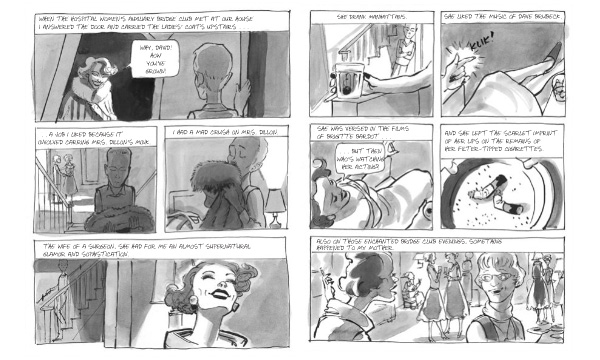
I am not a graphic novel aficionado, but David Small’s Stitches  has been on my tbr radar for a while. Small’s memoir of growing up in 1950’s Detroit with an older brother, a radiologist father and a bat-shit crazy mother (although the discovery of her secret life makes her a tad more sympathetic) has won a slew of accolades and was a finalist for several major awards including the National Book Award.

I can’t comment on the quality of the art – or how it compares to the art of other graphic novels because I don’t have any frame of reference. All the pictures are simple and black and white, but they were very effective drawings.

The story of David’s life begins at six. The reader learns a little bit about his family, his absent father, his cold and distant mother.  Memoirs aren’t meant to dissect an entire life; rather, this is the story of one life-altering moment. A growth on David’s neck, discovered when he is 11, must be removed. The diagnosis: a cebaceous cyst. It takes David’s parents three and a half years to organize the surgery – not just one operation, but two. When David wakes up from the second operation, he discovers that his vocal chords have been severed and he is, for all intents and purposes, mute.

I read Stitches in an afternoon. It’s a sad tale, made darker because of the author’s muted drawings. For anyone wondering whether it is possible to have a worthwhile life after a craptastic childhood, Stitches is proof-positive.

The Fault in Our Stars – John Green

Late in the winter of my seventeenth year, my mother decided I was depressed, presumably because I rarely left the house, spent quite a lot of time in bed, read the same books over and over, ate infrequently, and devoted quite a bit of my abundant free time to thinking about death.

Meet Hazel. She’s got cancer. It started as thyroid cancer, but now it’s in her lungs. There is no cure, but there is this miracle drug, Phalanxifor (Green points out in his acknowledgements that it’s a made up drug.), and although Hazel’s lungs are practically useless and she has to be hooked up to her oxygen tank all the time, she does okay. Except for, you know, the depression. Or whatever.

Her parents insist that she go to the  cancer survivor’s support group meeting – which she had grown to “to be rather kicking-and-screaming about” – and it is there that she meets Augustus Waters.  He’s in remission after losing his leg below the knee from “a little touch of osteosarcoma.” Her immediate reaction: he’s hot. From this point on, I flew through the pages of  John Green’s YA novel The Fault in Our Stars, alternately laughing and crying.

Telling you much more about the plot won’t actually do the book any justice. Besides, it isn’t so much about what as it is about to whom. The Fault in Our Stars is driven by the magic that is Hazel and Augustus.

Their relationship begins over an exchange of books (be still my heart). Hazel lends Augustus her favourite novel,  An Imperial Affliction, the story of Anna, a girl with a rare cancer of the blood. But, Hazel says:…

it’s not a cancer book, because cancer books suck. Like, in cancer books, the cancer person starts a charity that raises money to fight cancer, right? And this commitment to charity reminds the cancer person of the essential goodness of humanity and makes him/her feel loved and encouraged because s/he will leave a cancer-curing legacy. But in AIA, Anna decides that being a person with cancer who starts a cancer charity is a bit narcissistic, so she starts a charity called The Anna Foundation for People with Cancer Who Want to Cure Cholera.

Hazel has some unanswered questions about An Imperial Affliction. She has tried for months to get in touch with the book’s author, Peter Van Houten. When Augustus actually makes contact with Van Houten, it sends the pair on the trip of a lifetime.

But much of that is plot and while the story might be predictable in many ways, there is nothing ordinary about this novel. Nothing. Hazel has been sick for a long time; she has already come to terms with her mortality. What she doesn’t know how to do is live. Augustus is the perfect antidote to her doldrums, beautiful and funny.

And make no mistake – this book is funny. These kids know how to laugh at themselves. When  Isaac, another member of the support group, loses his remaining eye to cancer he says: ” …people keep saying my other senses will improve to compensate, but CLEARLY NOT YET. Hi, Support Group Hazel. Come over here so I can examine your face with my hands and see deeper into your soul than a sighted person ever could.”

As if navigating the thorny path to adulthood weren’t difficult enough, the teenagers in this book must also contend with bodies that have forsaken them.  It is also heartbreaking to watch Hazel’s parents try to protect their daughter, even when they know they can’t. As a mom myself, I can only imagine how horrific it must be to care for a terminally ill child.

Augustus sums it up best: “…the thing about pain…it demands to be felt.”

Absolutely my favourite book this year.

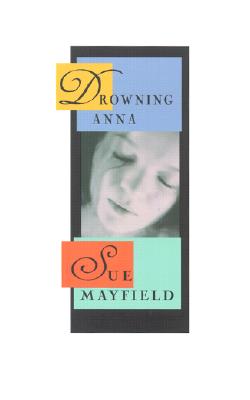
Drowning Anna – Sue Mayfield

When Anna Goldsmith moves to Yorkshire from the south of England, she finds the transition difficult – that is until Hayley Parkin, the most popular girl at school, takes Anna under her wing. Sue Mayfield’s YA novel Drowning Anna unspools the story of Anna’s relationship with Hayley, which deteriorates almost as quickly as it began.

As Melanie explains:

Hayley Parkin goes off people. I don’t know why. Perhaps she gets bored with them. Perhaps she runs out of things to buy them. Perhaps she can’t stand competition. She doesn’t seem to need a reason. She drops people.

Drowning Anna combines third person narration with Melanie’s reflections and entries from Anna’s journal. From all these different points of view, we come to understand what has driven Anna to such a commit such a drastic act. Anna is a very relateable character. She’s smart, athletic, musical and attractive – but she’s also 14 when the story starts and given to bouts of self-doubt. Hayley Parkin is not the only thing wrong with her life: her teacher-mother is stressed out and moody, her doctor-father is never home; her older brother, Tom, is busy with his own life and doesn’t always live up to expectations – meaning there is extra pressure on Anna.

None of that explains, however, why Hayley decides to focus so much malevolent energy on Anna. She starts small by ignoring her, but it doesn’t take long for the harassment to extend to mimicking her accent (which, granted, means less in a Canadian context but having lived for a time in the UK, I understood this as a tool of torture), isolating Anna and actually physically hurting Anna.

Hayley, it seems, has a lot of charisma. The other students want to be in her orbit, but it feels sort of like, “keep your enemies closer.” We don’t ever get a clear understanding of why Hayley is so hateful, but it hardly matters. At the end of the day, Hayley will have to live with her choices.

Mayfield really captures the very particular cruelty of teenage girls. Anyone who has ever been bullied will see themselves in Anna Goldsmith.

The Returning – Christine Hinwood

I read a lot more Young Adult fiction.  I do it so that I can have conversations with students in my classroom. I read some YA because it sounds interesting to me. Recently, I volunteered to help review some books for the Dept of Education, books which have been selected for possible inclusion on the sanctioned reading list and thus destined for English classes in middle and high school. That’s how I came to read Christine Hinwood’s debut novel, The Returning.

The Returning, a Printz Award winner, is the story of how the aftermath of a domestic war between the Uplanders and Downlanders affects a disparate group of people including Cam Attling (a returned soldier), Pin (his younger sister), Graceful (Cam’s fiance) and Lord Gyaar (the man who saved Cam’s life). It’s alternate historical fiction – which reads like fantasy because the world is sort of, well, otherworldly. Is it the past? Future?

While not without its merits, Hinwood’s book didn’t appeal to me. The story is elliptical in nature, jumping around in time and place – never settling with one character long enough to allow the reader to really get to know them.

Cam is the only man from his village to return from the war and he’s having a difficult time adapting to life back on his father’s farm. Other villagers always want him to talk about what happened to their husbands and sons and brothers, but Cam just wants to forget. But it wasn’t just Cam’s war  – the world has changed for everyone. Da explains the war to Pin as a rock that has been:  “thrown and done, but the ripples do take longer to spread and flatten. That’s what this is, the ripples.”

I understand why Hinwood didn’t want to focus entirely on Cam – the war has affected many other people (including those from the winning side) – but I just couldn’t seem to keep everyone straight. Perhaps it was all the strange names: Diido, Hughar, Acton. Maybe it was the unusual way the characters spoke – although the writing was often quite beautiful. Maybe Hinwood was too ambitious, trying to capture the aftermath of war for too many players.

I just didn’t  feel like I truly knew any of the characters and so, for me, The Returning just didn’t have the emotional impact I had hoped it would

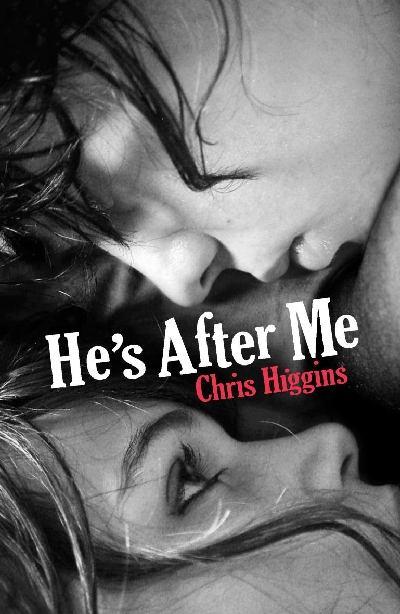
He’s After Me – Chris Higgins

When smart but plain Anna meets Jem in Chris Higgins’ novel He’s After Me, her life is falling apart. Her parents have recently separated, her mother has retreated from the world and her younger sister, Olivia, is suddenly dressing far too provocatively and hanging out with kids that Anna doesn’t particularly like.

Jem is, well, electrifying. “…his smile faded and our eyes held and that’s when it happened. A charge passed through me like an electric shock.”

The first person narration sweeps the reader along and allows us to see both Jem’s many charms and also Anna’s growing doubts about the intensity of  her first serious relationship. Her best friend Zoe sees it though. “He’s got inside your head, Anna! He controls you. Can’t you see it?” she says.

But Anna can’t – or won’t see it. As Jem leads her further and further away from the safety of her life, she takes risks and chances she would never have previously considered.

That might have been enough to drive this YA novel’s breakneck pace – but there’s more. Someone seems to be watching Anna and Jem.

And so love’s arrow finds its target.

And she’d seemed like such a sensible girl too, not the kind to lose her head over some bloke.

That’s love for you.

Anna is a likeable character. I found myself really turning the pages to find out what was going on – wavering between believing in Jem’s charms and wanting to scream at Anna for not seeing through them. The anonymous third person kept me guessing, too. So, in that respect – good little page turner.

But I didn’t like the ending much.

Evidence of Blood – Thomas H. Cook

Jackson Kinley, the protagonist of Evidence of Blood,  is a true-crime writer. His career has brought him close to unimaginable horrors: rapists and murderers and people who torture others for pleasure. Kinley (as he is most often called) seems somehow immune to these horrors. Perhaps it’s his IQ, which is reportedly off the charts. Perhaps it’s his own childhood – he was raised by his grandmother in backwater Sequoyah, Georgia. Whatever the reason, Kinley  is able to face the dark deeds of the world’s most reprehensible criminals without flinching.

His armor is breached, however, when he gets the call that his childhood friend, Ray Tindall, has been found dead. He returns to Sequoyah and learns that Ray was trying to uncover the truth about a murder which had occurred many years before.

Thomas H. Cook  – as those of you who are regular readers here already know – is my favourite mystery writer. True, I am not a mystery scholar by any stretch, but an accidental discovery of his book Breakheart Hill several years ago has turned me into a fan and I have read several of his books (and I am thrilled to know there are more waiting to be read.)

Cook is particularly adept at creating nuanced characters and Kinley is no exception. Kinley’s past is deeply rooted in Sequoyah, but even he is unaware of just how deep those roots go. He can’t help himself – he’s an investigator and the shocking death of his oldest (and perhaps only) friend, has him sifting through the past. Ray, it turns out, was looking into the mysterious disappearance of Ellie Dinker, a sixteen year old whose bloody dress was found on a tree branch in 1954. A man was sentenced to death for that crime and Ray was trying to prove his innocence.

Like all of Cook’s novels, the mystery will keep you guessing. I tried out several potential (and I thought entirely plausible) solutions and was still surprised at the end of the book. I like the way Cook writes; his are literary mysteries. I feel like the craft of writing is just as important to him as telling a cracking good story – which he does. You keep turning those pages.

As Kinley follows Ray’s paper trail, interviews the players who are still alive and recalls childhood memories, he slowly begins to understand the implication of Ray’s words to him at one of their final meetings: “It’s better to know, don’t you think, Kinley? No matter what the cost?”

If you like well-written  mysteries, you really can’t beat Cook.

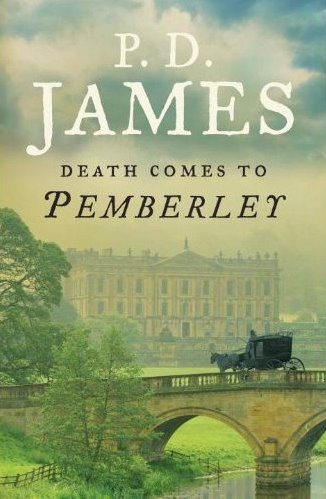
Death Comes to Pemberley – P.D. James

Death Comes to Pemberley by famous British crime novelist P.D. James is fan fiction. That’s right: P.D. James borrowed characters and settings made famous by Jane Austen and wrote them into a new story which takes place six years after Elizabeth and Darcy marry. That’s essentially what fan fiction is; writers (albeit, generally amateur writers) find new ways to breathe life into familiar characters. Because James is a crime writer, she wrote a mystery (although a relatively tame one, even by my standards.)

Fan fiction is (according to Wikipedia) “a broadly-defined term for fan labor  regarding stories about characters or settings written by fans of the original work, rather than by the original creator. Works of fan fiction are rarely commissioned or authorized by the original work’s owner, creator, or publisher; also, they are almost never professionally published.”  I would have agreed with that definition except for all the fan fiction that has found its way into bookstores recently (Fifty Shades of Grey, for example, literally started its life as Twilight fanfiction; Pride and Prejudice and Zombies and Android Kareninaare two examples from Quirk Classics). Perhaps I am misinterpreting the definition of fan fiction, but to me when you borrow another writer’s characters and just give them a new plot — that’s fan fiction. Yes, even if it’s a parody. (Fan fiction writers write parodies all the time.)

But, hey, I’m a huge fan of fan fiction and so pointing it out isn’t meant as a criticism. Even Pulitzer Prize winning author, Michael Chabon understands the merits of derivative fiction. In his book of essays Maps and Legends: Reading and Writing Along the Borderlands he says:

 …all literature, highbrow or low, from the Aeineid onward, is fan fiction. That is why Harold Bloom’s  notion of the anxiety of influence has always rung so hollow to me. Through parody and pastiche, allusion and homage, retelling and reimagining the stories that were told before us and that we have come of age loving – amateurs – we proceed, seeking out the blank places in the map that our favorite writers, in their greatness and negligence, have left for us, hoping to pass on to our own readers – should we be lucky enough to find any – some of the pleasure that we ourselves have taken  in the stuff we love to get in on the game. All novels are sequels; influence is bliss.

No matter the source material, all literature, ultimately, has to stand on its own two feet. Readers needn’t be a fan of Austen — or even know who she is — to read Death Comes to Pemberley because in the opening chapter James fills us in on the backstory. Once readers have the lay of the land, they can jump into the mystery which for me was only so-so. I like Austen fine, although I wouldn’t say I am a huge fan. I love a good mystery. I don’t have any problem with dense, old-fashioned prose (really good fan fiction mimics the original author’s style and recreates characters that are recognizable to readers of the original work). But Death Comes to Pemberley was a big YAWN. Seriously: nothing happens.

Elizabeth and Darcy are madly in love — although they spend virtually no time together. Elizabeth is preparing for Pemberley’s yearly Lady Anne’s ball when her younger sister, Lydia, arrives screaming that her husband George Wickham has been murdered in Pemberley Wood. Wickham is a bad apple and has been a constant source of embarrassment for Darcy. When it turns out it’s not Wickham who is dead but another male who was traveling with him, Darcy isn’t sure Wickham actually committed the crime.

It’s not much to make a mystery meal out of, but James fills page after page with lengthy descriptions of relationships and manners and protocol and the moon on the woods and it was so S-L-O-W. If it hadn’t been our first book club pick (and by a new member, no less) I would have abandoned it, for sure. I kept plodding along, but for me, the original charm of the Elizabeth/Darcy relationship was absent and the rest of the book just wasn’t my cup of tea.