The Geography of Girlhood – Kirsten Smith

girlhoodTurns out The Geography of Girlhood was written by someone who knows a lot about teenage girls – at least in the movies. Kirsten Smith is the co-writer of some classic teen flicks including 10 Things I Hate About You, Ella Enchanted and one of my all-time, never-get-sick-of-it faves She’s the Man. (I can not stress how much I love She’s the Man. I’ve seen it many times and it still makes me laugh I love that I can share it with my students when we study Twelfth Night.)

When The Geography of Girlhood starts, Penny is just fourteen.  Having rowed herself out into the middle of the bay to contemplate her life she thinks: “One day, I’ll find my way away from here/ and go somewhere real/ and do something great/ and be someone wonderful.”

Of course, the problem with being a teenage girl is that there’s a whole lot of crap to wade through before you get that “someone wonderful.” Fourteen, Penny intones, “is like rotten candy.”

The novel, told in free verse form, follows Penny from the end of grade nine until just after her sixteenth birthday.

Penny is jealous of her  perfect, older sister, Tara, her “long torso,/ the breasts lodged high/ like tea cakes/ on her powdery skin.” She longs to experience “love” as she imagines it exists between Tara and Bobby, her sister’s boyfriend. “I look at her/ and memorize everything./ So when the time comes,/ and the boy’s eye glitters like a crime,/ I will know what to do.”  We learn about Penny’s complicated feelings for the mother who left her, who, in fact “always wanted to leave wherever she was.”

Readers will recognize themselves in Penny. While it’s true that fourteen was a L-O-N-G time ago for me, I can totally remember that feeling that  “you look good only once a week/ and it’s never on the day of the dance.”

Penny navigates the treacherous geography of  her girlhood, in language that is both  poignant and pointed.  She falls in and out of love in the way of all teenaged girls. She makes stupid choices and does stupid things, but she is also smart and resilient and open to all the possibilities life has to offer.

“If anyone tells you that life is predictable,/ DO NOT BELIEVE THEM,” she remarks.

I really enjoyed this book.


All Unquiet Things – Anna Jarzab

allunquietthingsAnna Jarzab’s first novel All Unquiet Things is  mature and thoughtful. Kirkus called it “a sophisticated teen mystery.” It’s actually hard to believe that this book is written for young adult readers; its prose, while not exactly sophisticated, is a cut above many other books published for young readers.

It was the end of summer, when the hills were bone dry and brown; the sun beating down and shimmering off the pavement was enough to give you heatstroke. One winter came, Empire Valley would be compensated for months of hot misery with three months of torrential rain, the kind of downpours that make the freeways slick and send cars sliding into one another on ribbons of oil.

All Unquiet Things is the story of Carly, Neily and Audrey, students at Brighton Day School, a prestigious private school outside of San Francisco. Through a series of flashbacks – told from Neily and Audrey’s perspective – we learn about how Carly and Neily’s middle school friendship blossomed into something more, and how the arrival of Carly’s cousin Audrey changed the dynamics of their relationship.

These teenagers are smart, but they also have a lot of other issues including deadbeat or overly demanding parents. Neily’s parents are divorced and according to Neily his father “hadn’t really parented me since I was very young and I tended to get away with most things….” The girls have problems of their own.

So what’s the mystery? Well, Carly’s dead. (Don’t worry – her ghost doesn’t speak.)  Someone shot her four times and the circumstantial evidence points to Audrey’s alcoholic/drug addicted father Enzo, so he’s serving time in jail. Audrey is convinced that her father is innocent and even though her relationship with Neily has been strained by events, she seeks him out to help her try to figure out who really ended her cousin’s life.

Their investigation exposes the slimy underbelly of Brighton’s facade, but also allows the reader a glimpse into the messed up lives of students with too much money and not enough parental involvement. As Neily and Audrey try to figure out what really happened to Carly, they become friends, at first united in their search for the truth but then because they grow to genuinely care for each other.

You can’t really see whodunnit early on, which makes this a perfect read for students who like a page-turner. All Unquiet Things works on another level, too. Neily has to consider how he has been shaped by his love for Carly and how that love, no longer sustainable or attainable, is holding him back from living a fulfilling life. Audrey has to own up to her own part in Carly’s story and come to terms with the fact that her father might not be capable of all she hopes for him.

All in all, a terrific book.


A Family Secret – Eric Heuvel

family secretEric Heuvel is a Dutch comic book artist, so A Family Secret, a story which takes place in Amsterdam during the second world war, is perhaps a topic especially close to his heart.

Jeroen is looking for items to sell at a flea market held on Dutch Queen’s Day. He decides to head over to his grandmother’s house, hoping to score some good stuff without actually have to visit with his grandmother. Snooping through the attic, he comes across a scrapbook filled with items marking the German occupation of Holland.

“I”ll tell you why I started this scrapbook,” his grandmother tells him. Jeroen is thinking: I hope this doesn’t take long. It turns out, though, that her story is riveting.

When I was twelve or thirteen I read Anne Frank’s Diary of a Young Girl. It was one of those turning point books for me, as I am sure it was for many other young people. Here was a real teenager, coping with typical teenage problems but under extraordinary circumstances. Decades later, while visiting Amsterdam, I was priviledged to visit the house where she and her family were hidden away. I can’t begin to explain to you the feeling of stepping behind the hidden door and heading up the stairs to the annex where she spent just over two years of her short life.

A Family Secret tells another one of the, I suspect, hundreds of thousands of personal stories about that horrific time in history. Jeoren’s grandmother tells of her father, a Dutch police officer, forced to make choices she doesn’t understand until years later, about her brothers, one who joins the resistance and one who joins the Nazis and of her childhood friend, Esther, a  German Jew who fled with her parents to the safety of the Netherlands…only to discover there was no safe place for them.

The graphic novel format of this particular story makes it a perfect read for reluctant readers, but all readers should get something meaningful out of the personal choices the characters are forced to make in times of great distress.

These atrocities continue to be written about, as they should. We should never be allowed to forget.

Borderline – Allan Stratton

borderlineAllan Stratton’s YA novel Borderline wouldn’t necessarily be something I’d pick up on my own, but I am trying to read more ‘boy’ books, especially those that might appeal to reluctant readers. I’ve inherited a class this semester and the majority of them are boys and many of them wouldn’t exactly put reading at the top of their to-do lists. I always think the key to reading success is to find just one book that they like. Borderline could be that book for someone.

Sami Sabiri is almost sixteen. He’s a pretty average teenager; he lives in an American suburb, crosses swords with his strict father,  and tries to stay out of the way of bullies at the expensive private school he attends. He’s also Muslim.

At first, Borderline doesn’t seem like anything more than the pretty standard YA fare. Sami is likeable and relatable and his life is just ‘other’ enough to be intriguing. The fact that he is Iranian offers plenty of opportunities to discuss today’s headlines, too, because suddenly Sami finds himself in the middle of an FBI investigation.

The agents grill me to a crisp. Questions about Dad, his work, who he knows, what he does. I hardly hear a word….”We’re Americans,” I blurt out. “Mom and Dad – you can’t put them on a plane. You can’t send them off to be tortured.”

Sami’s journey to discover the truth about his father’s supposed terrorist activities is also a journey of self-discovery. Suddenly he has a reason to stand up and be counted. As his loyalty to his father wavers, he finds hidden reserves of strength and courage. If the resolution is, perhaps, a little too convenient, it won’t really matter to the majority of young readers. Sami is a character worth rooting for.

As to whether my reluctant readers would like this book – I think they would. The writing is accessible with a minimum of flowery prose. It’s pretty much straight-up plot and I think most of the boys in my current class would enjoy it.

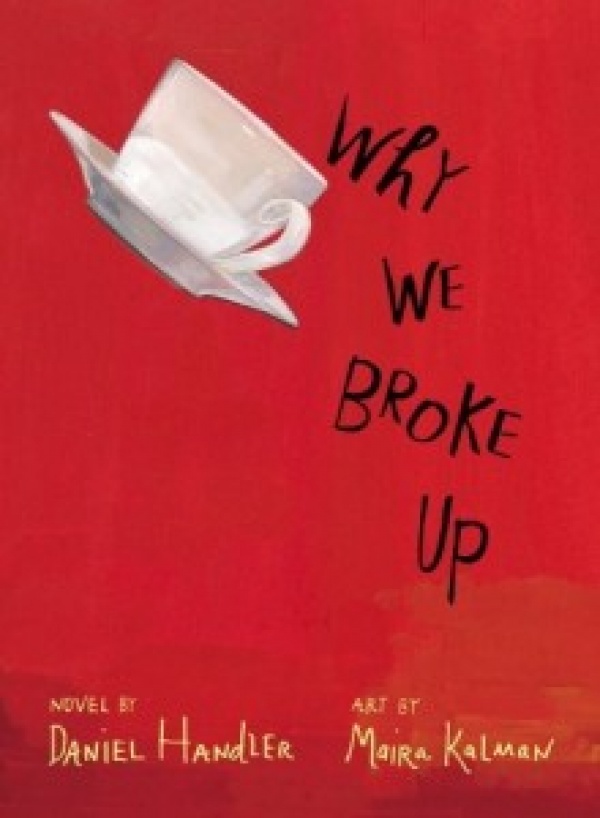
Why We Broke Up – Daniel Handler

whywebrokeup_cover-220x300__span

Daniel Handler has written a book that will resonate with just about anyone – young or old – who has ever had their heart stomped on. Which means YOU will love this book. Yes you.

Why We Broke Up is Min Green’s farewell letter to Ed Slaterton, a boy she met at her best friend Al’s Bitter Sweet Sixteenth birthday. As she recounts her brief but meaningful relationship with Ed, hunky co-captain of the basketball team, she also returns to him all the detritus of that relationship.

I’m telling you why we broke up, Ed. I’m writing it in this letter, the whole truth of why it happened. And the truth is that I goddamn loved you so much.

You don’t have to be sixteen to appreciate what’s in Min’s box: the bottle caps and ticket stubs and note on a napkin. Every relationship has its stuff. Min’s relationship with Ed lasted only a few weeks, but as is often the case with the very young, they pronounced their feelings (Ed first) very early on.  They might have seemed, at first glance, totally mismatched. Min, the Jewish girl and movie aficionado and Ed the cool jock with a string of past-girlfriends. But, as Min says: “…the thing with your heart’s desire is that your heart doesn’t even know what it desires until it turns up.”

When I was in grade nine I was madly in love with a boy called Dana. I loved him as only an awkward fourteen-year-old girl can possibly love a much cooler fourteen-year-old boy: from afar. I still have a picture of us taken on our grade nine trip to Prince Edward Island. Me in my Indian cotton shirt and really unfortunate flared jeans, a Bay City Rollers haircut; him in the uniform of the day (and also, perhaps, a Bay City Rollers haircut. Come on, it was the 70s). Anyway. He drank from my coke bottle and I saved that bottle and the inch of pop left at the bottom for years! And I never even got a kiss.

Why We Broke Up is a good bye letter, but it’s also love letter. It’s quirky for sure. (Daniel Handler is perhaps better known as Lemony Snicket, author of the very popular Series of Unfortunate Events books. My 13 year old son is almost through the series and he is constantly reading me bits because he finds them so funny.) The book is illustrated by Maira Kalman and it’s a lovely book – glossy papered and heavy.  brokeupIt’s a clever way to tell an often told story – boy meets girl. Etc.

It’s hard not to feel for Min, though, as she sifts through the mementos, calling up the events associated with them. There’s a story for every artifact and even though she’s giving them all back, the reader understands that her heart will not easily be mended. That’s love for you.

Visit The Why We Broke Up Project


Bliss – Lauren Myracle

blissBliss Inthemorningdew (no, I’m not joking!) is new at Crestview Academy. It’s tough enough to be the new girl, but Bliss’s life is further complicated by her unusual last name and the fact that her parents are hippies. Bliss has spent her entire fourteen years living in unusual places: a tent, the basement of a college and, most recently, a commune. Now she lives with her very formal maternal grandmother in Atlanta, dumped there by her parents who have run off to Canada to protest the Vietnam War. Or Nixon. Something, anyway. They’re sort of non-entities, in a very strange way.

This is a situation neither Grandmother not I would have chosen, but Grandmother is nothing if not morally upright, which made it impossible for her to turn me away. She’s also uptight, and it seems that often the two go together.

Although life with her Grandmother is odd (at least in the beginning), Bliss is looking forward to having something she hasn’t ever had before: a friend. Soon is she is navigating the impossibly complicated world of teenage drama and it’s a world about which she knows very little.

Lauren Myracle’s novel Bliss isn’t really a coming-of-age story, though. It’s sort of part mystery, part ghost story, part thriller. On some levels it works very nicely; I had no trouble turning the pages as I raced along to the book’s conclusion. In other ways, the book is perhaps a bit bloated. There’s commentary on racism, mentions of the Klan and many of the characters in this book are concerned with Charles Manson and the now infamous murders which took place during the summer of 1969.  Myracle opens chapters with quotes from Manson and quotes from the Andy Griffith Show, perhaps as a way of balancing extreme good and extreme evil. For my money, Bliss might have benefited from a little judicious editing and more of a focus on what was really intriguing:  new girl tries to fit in and gets caught up in creepy hi-jinx.

Bliss is a likable character. I’m not sure I understand why her parents dumped her. She’s smart and kind and open-minded. It was easy to be with her and to fear for her safety. I’m certain teens will find lots to like about this book

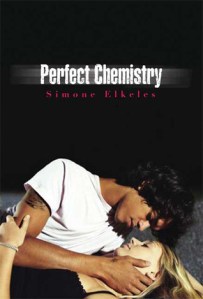
Perfect Chemistry – @SimoneElkeles

perfect chemistryI admit it: I have a type. I like bad boys with kind hearts. Stories that feature these guys (and I’ve read a lot of them) fill in those ticky boxes faster than you can say smoldering eyes and tattoos. You’d think by now I’d be over it, but clearly not. I devoured Simone Elkeles YA novel Perfect Chemistry in one sitting.

Brittany Ellis is eighteen and just beginning her senior year of high school in a Chicago suburb. She’s pretty and popular, captain of the cheerleading team, dating the hunky high school quarterback.  She lives in a huge house on the right side of town.

Everyone knows I’m perfect. My life is perfect. My clothes are perfect. Even my family is perfect. And although it’s a complete lie, I’ve worked my butt off to keep up the appearance that I have it all. The truth, if it were to come out, would destroy my entire picture-perfect image.

Alejandro “Alex” Fuentes is also eighteen and also in his senior year, but his life is vastly different from Brittany’s. For one thing, he comes from the wrong side of the tracks. For another, he’s a gang banger.

Senior year. I should be proud I’ll be the first family member in the Fuentes household to graduate high school. But after graduation, real life will start. College is just a dream. Senior year for me is like a retirement party for a sixty-five-year-old. You know you can do more, but everyone expects you to quit.

The interesting thing about both of these characters is that what the reader sees on the surface is only part of their story. The alternating first person points of view allows us a glimpse into lives which are much more than what they initially appear. Brittany and Alex would have no reason to ever interact. In fact on the first morning of school, Brittany’s reaction at almost hitting Alex while trying to nab a parking spot pretty much says it all:

Alex takes a step toward my car. My instincts tell me to abandon my car and flee, as if I was stuck on railroad tracks with a train heading straight for me….

But Brittany is no shrinking violet and when, later that day, she’s paired with Alex for a year-long chemistry project, she gives as good as she gets. So, naturally, sparks fly.

Perfect Chemistry is a love story, true, but it is also a story about making choices, standing up for what you believe in,  and breaking down those stereotypes which often hold us prisoner.  Brittany and Alex are well-written characters, believable and relateable. I really wanted things to work out for them.

Back in the 70s there was a movie very similar to this book. It’s cheesy now because frankly, blue-eyed Robby Benson was never going to make a very convincing “Chicano”. Still, it has similar themes. In case you have some time to kill, check out Walk Proud.

Reality Check – Peter Abrahams

realityI loved Peter Abraham’s novel End of Story. It was fast paced and well-written and had a right-out-of-left-field curve ball that was suspense-thriller awesome. His YA thriller Reality Check doesn’t have quite the same punch, but young readers, particularly boys, will likely find this story fast-moving and quite exciting.

Seventeen-year-old Cody has it pretty good. He’s captain of the football team and he’s dating Clea,  the prettiest (and smartest) girl at his Colorado high school. His life’s not perfect, though. His mom died of cancer and his father tends to drink a little too much. Then Clea’s father decides his daughter needs to go to boarding school in Vermont – separating the teenagers. Things go from bad to worse when Cody does some serious damage to his knee and Clea suddenly disappears. Cody does the only thing that makes sense: he quits school, hops in his car and drives to Vermont to join in the search.

That’s the basic premise of Reality Check.  It has the requisite twists and turns, the shady characters who aren’t quite what they seem and just enough character development to keep the average reader invested.

Cody is central to the story. The third person narrative is limited to his perspective and that’s a good thing because Cody is likable. He’s tenacious and fearless, too. Because he knows Clea intimately, he’s not willing to accept the party line – that she’d somehow fallen off a horse and had somehow gotten lost in the woods. He keeps digging, looking for clues and then answers.

I suspect that many teens won’t figure out the mystery too early and that they will root for Cody and Clea’s reunion as I did. There is some language in the book, so it’s perhaps not for younger teens, but it’s an enjoyable book for those who like fast-paced page-turners.

I Am Not Esther – Fleur Beale

i-am-not-estherDespite the praise Fleur Beale’s YA novel, I Am Not Esther has received (Kirkus called it “an engaging and credible survival story of an unusual nature”), I wasn’t particularly moved or invested. Perhaps the story was just geared a little young for me or perhaps I just felt that the story – which was intriguing, for sure – was just a tad superficial.

Kirby is 14 and has spent much of her young life looking after her  “dizzy flake of a mother” mother. Just after Christmas, Kirby’s mum announces that they are leaving Auckland (New Zealand) and moving to Wellington. Everything happens so suddenly, Kirby doesn’t even have an opportunity to process this before everything changes again. Kirby’s mum announces that she is going to do missionary work in Africa and Kirby is going to be staying with relatives she didn’t even know she had. Worse, her uncle and aunt and cousins are members of a strict religious sect.

They’re religious. They all are. They’re called Children of the Faith. They threw me out when I was sixteen because I…because…

So, lickety-split Kirby is dropped off at her Uncle Caleb and Aunt Naomi’s house and expected to adapt to an alien and strict way of life. There is no radio or television. The family prays and works. Punishment for disobedience, Kirby learns quickly, involves long hours on your knees or seclusion in a windowless room learning bible verses. Uncle Caleb changes Kirby’s name to Esther.

Caleb and Naomi aren’t horrible people; they just believe in something Kirby doesn’t. And, clearly, neither does her mum. So one of the problems with the book is why Kirby wasn’t dropped off with to live with the brother (she has five of them and three sisters) who also left the church. It seems non-sensical to me that she would leave her daughter to a life that she had trouble living herself.

Kirby adapts as best she can; what choice does she have? She never even hears from her mother, it’s like she drops off the face of the earth.  She finds a friend in her older cousin, Daniel, and the guidance counsellor at school. When the resolution comes it isn’t all that compelling because it’s not like Kirby’s life was ever in danger. And although Kirby is a likeable character, the book itself was only just okay. That said, I suspect younger readers would really enjoy it.

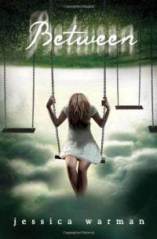
Between – Jessica Warman

Elizabeth Valchar has it all: looks, popularity, a boyfriend who loves her, a best friend who is also her step-sister. On the night of her eighteenth birthday, Liz wakes up to a new reality: she’s dead. That’s not a spoiler, by the way – we find know this by page 6.

Jessica Warman’s YA novel Between is a curious hybrid. It’s part mystery (I really found myself flipping those pages to see what had happened to Liz), part social commentary, part ghost story  and part teen drama.

When Liz ‘wakes up’ and realizes that she is between life and death she also discovers that she is not alone. Her companion is a former classmate, Alex, a boy who had been involved in a hit and run a few months previously. Alex is her guide in this strange new space Liz finds herself.

By placing her hand on Alex, Liz can revisit moments in her life and she isn’t all that happy with the things he has to show her because, as it turns out, Liz  Valchar wasn’t that nice.

My stomach feels hollow with guilt and shame as I watch my younger self, and all my friends, giggle while Topher torments Frank.

“But it’s not like I really did anything…I mean it was mostly Topher-”

“You’re fight,” he interrupts, you didn’t do anything. You never did anything to help him. You wouldn’t have dared; it might have made you less cool.”

As Elizabeth comes to terms with who she’d been in life, we also see how many of the people in her orbit cope with her death. Her ability to listen in on conversations and revisit significant moments in her life gives her insight and ultimately makes her a better person. Although I figured out one of the novel’s central mysteries relatively early on, it didn’t hinder my enjoyment of this book.

I think teens will really see themselves in Liz and her friends. They’ll certainly root for her redemption.