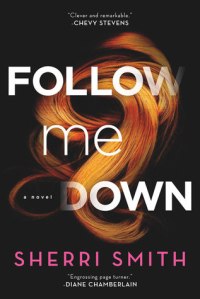
Follow Me Down – Sherri Smith

When Mia’s twin brother Lucas goes missing after being linked to the death of one of his followstudents, Mia has no choice but to return to her small North Dakota hometown. Sherri Smith’s debut novel Follow Me Down plumbs the depths of sibling ties, and uncovers the slimy underbelly of a town that seems to be filled with dark secrets and duplicitous characters.
Mia isn’t exactly living her best life in Chicago when the Wayoata Police Chief calls her asking if she’s heard from her brother. (She hasn’t.) She works the night shift at a corner pharmacy, lives alone and is generally a prickly character. Lucas was always the golden child.

Lucas was already showing signs of how annoyingly good-looking he was going to be.[…] Blond, startling blue eyes, and movie star bone structure. […] As an adult, I’d actually witnessed women going slack-jawed over him, like, unable to speak for a few seconds as they took him in.

Mia is convinced that her brother is innocent of any wrongdoing; he just doesn’t have it in him to hurt anyone. He is a beloved English teacher and hockey coach at the local high school. The local police, including her childhood friend Garrett Burke, seem to have their sights set on Lucas, though, and Mia is sure that she has to a) find her brother and b) prove his innocence.

To say Follow Me Down is jam packed is an understatement. Mia ignores Garrett and turns over every rock possible trying to figure out what might have happened, not only to her brother but to the teenager he is accused of killing. The rumour mill is working overtime, and people in the community seem to think that Lucas and Joanna Wilkes were having an affair. Mia’s amateur investigation seems to stir up a hornet’s nest. A black truck keeps following her and trying to run her off the road; someone seems to be sneaking into her brother’s apartment and taking things; there are more shady characters than you can shake a stick at.

The whole time Mia is sleuthing, she’s self-medicating from her own personal stash of prescription meds. On more than one occasion, I wondered whether she was a reliable narrator. I can’t say that I warmed to her, really.

Still, by about the half-way mark there was no turning away from this story. I needed to know what happened to Lucas, and even if Mia didn’t exactly endear herself to me, I was still invested in her quest for answers.

A solid read.

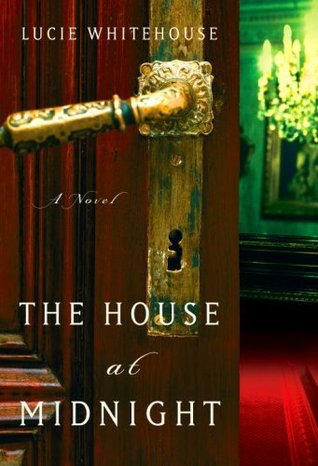
The House at Midnight – Lucie Whitehouse

housemidnightLucie Whitehouse’s debut novel The House at Midnight tells the story of Joanna and her close-knit circle of friends who spend weekends at Stoneborough Manor in Oxfordshire. Her dearest friend, Lucas, has recently inherited Stoneborough from his Uncle Patrick, a well-known art dealer. On their first visit there, Joanna observes that the house is “Three storeys high, [and] it reared up out of the night as if it were facing the darkness down.” The house gives Joanna a “pang of anxiety.” She wonders “How could it not change things between us.”

Whitehouse’s story works on a variety of different levels. First of all, the house is, at least to Joanna, menacing. To her, it feels like a malevolent entity, intent on causing harm. Despite the fact that she and her friends Martha (an American ex-pat and Jo’s roommate), Rachel and her new boyfriend Greg, Michael, Danny and, of course, Lucas, gather here to drink and dance and try, in some ways, to recapture the headiness of their college days, there is something about the house that unsettles her.

I had the sudden sense that there were eyes on me…My skin prickled. The sound of my voice played in my ear. I took a breath and forced myself to stand still for a moment and look into the unlit corners away from the lamps and up above my head to the landings. I half expected to see someone there, leaning over the banisters watching me. There was nothing. And yet there was.  It seemed to me that there was something lurking, something that was not benevolent.

Then there’s Lucas. Joanna meets him during her first week at college and the two form a strong bond. For a minute it seemed like their friendship might morph into something more romantic, but the moment passed. Now, ten years later, Jo is wondering whether she and Lucas might have a chance.

The House at Midnight captures that fraught period post college when you might be wondering what you’re going to do with the rest of your life. Lucas is a lawyer; Danny is in advertising. Jo works as a junior writer for a small weekly newspaper. None of them is particularly satisfied with their lives.

Then comes the romantic entanglements, which in a small, close-knit group often seem almost incestuous. As the novel moves along, it draws and redraws lines in the romantic sand, and some of the shifts cause irreparable damage to the group.

There were moments in the novel whether I wondered if Jo was a reliable narrator. Could I trust what she was telling me? Were her feelings about the house the result of an over-active imagination or something else? I liked that I didn’t quite trust her.

This book is SO good. The house itself is a character, full of shadowy corners and dark secrets.  There’s something claustrophobic about it and about these friends as they try to sort themselves out. Ultimately, the most sinister thing about the book is the length people will go to get what they want and the damage they are willing to cause in the name of love.

This is my second novel by Whitehouse. I read and loved Before We Met at the beginning of the year.

I can highly recommend both of these books.

The Savage Garden – Mark Mills

savagegardenIt’s 1958 and 22-year-old British student Adam Strickland has been given the opportunity to study a Renaissance garden at the Villa Docci in Tuscany. Of course, he jumps at the chance. Signora Docci will soon be leaving her home in the care of her son, Maurizio, but until she goes she knows the garden has some secrets to give up.

Mark Mills’ historical mystery The Savage Garden is a slow, thoughtful and complex puzzle of a book that begs you to pay attention. Adam arrives in Tuscany and “In almost no time he had fallen under Villa Docci’s spell.” The garden in question was built as a memorial to Flora Bonfadio. Her husband Frederico Docci had built the estate and then added the garden after her premature death at just 25.

The memorial garden at Villa Docci sat firmly within this tradition, and although it couldn’t match its eminent counterparts at Villa di Castello, Villa Gamberaia and Villa Campi for sheer size and grandiosity, it stood out for its human dimensions, its purity of purpose, the haunting message of love and loss enshrined in its buildings, inscriptions, and groupings of statues buried in the woods.

It is hard not to be caught up in Adam’s story, especially if you have spent any time at all in Italy. Interactions with the locals and with Signora Docci’s family, including her lovely granddaughter, Antonella, offer Adam both distraction and cause for concern: not all the pieces of the family’s history quite add up.

Although The Savage Garden isn’t a ‘page-turner’ in the strictest sense of the word (the novel’s pace is relatively slow and the nods to Greek mythology and Italian history were probably mostly lost on me), I still felt wholly invested in Adam’s story. Signora Docci is delightful and I enjoyed their relationship. I also really liked Adam’s older brother, Harry. He’s a sort of irreverent character, someone at odds with Adam’s more scholarly personality and while Harry certainly seems to rub Adam the wrong way, his arrival in Italy breathes fresh air into Adam’s hot and insular  life. There are two mysteries at Villa Docci, and Adam is keen on solving them both.

It’s  worth the effort to tag along.


My Husband’s Wife – Jane Corry

By the time I got to page 100 of Jane Corry’s debut novel My Husband’s Wife, I felt like it myhusbandswifewas too late to abandon it even though I didn’t like any of the characters. I just don’t get why this book garnered so much praise. Geesh, Parade even compared it to Gone Girl

Lily is a brand new solicitor in London. She’s also newly married to Ed, an artist. Theirs was a whirlwind romance, and I am not joking. They married about two weeks after meeting. Lily has some dark secrets in her past, though, and she is hoping that this marriage will help her move on.

Her first professional job is to meet with Joe, a guy serving time for scalding his girlfriend to death. Yes, you heard that correct. Joe is an odd man, but Lily finds herself strangely attracted to him.

Then there’s Carla, a nine-year-old, who lives with her single mother. They are Italian, which is apparently cause for much ridicule…in London…in 2000. Carla is picked on mercilessly by the other kids, has no friends and is not even cared for by the teachers at her school. She is a strange child, no question. Her path crosses with Lily’s because they live in the same apartment complex. Soon Lily and Ed are looking after Carla when Carla’s mother is “working” (code for meeting her married lover).

One of the issues I had with My Husband’s Wifeis that there is SO much going on. There’s Joe’s case. There’s Carla’s sad little life. There’s Lily’s precarious marriage to Ed. There’s her secret past.  And then the novel flashes forward twelve years.

Carla returns to London from Italy where she’s been living with her mother and grandparents. She is bent on revenge for some imagined slight. She reconnects with Lily and Ed; she thinks she is owed a great deal of money because of a painting Ed did of her as a child. Lily and Ed now have a son, Tom, but he has Asperger’s and is too difficult to handle, so they’ve shipped him off to live with Lily’s parents in Devon. Lily is now a well-respected lawyer because of what happened with Joe. Her marriage, however, is less successful. And she still has her dark secrets.

It’s not that I couldn’t keep up with all the plot’s machinations, it’s more like I just didn’t care about them and that has less to do with the plot points and more to do with the characters. Not a single one of these people were sympathetic (perhaps with the exception of Lily’s parents) or even all that believable.  I felt like I was being told a story, rather than experiencing events as they unfolded.

Just a huge disappointment…and yet I did finish it, so I guess that’s something. And I suspect I am in a very small minority of readers who didn’t like this book.

Books to distract you…

When it comes to reading these days,  I am looking for books that are total page turners. I want to be entertained and distracted without it being too labour intensive…so I thought I would offer up a few titles that might fit the bill.

First off, I HIGHLY recommend everyone check out Thomas H. Cook. If you tend to read via kobo or kindle you can probably get a hold of his stuff and he’s definitely on Audible. Cook is mystery writer I discovered probably 20 years ago. Since that first book, Breakheart Hill, I have been a massive fan.

I recommend Master of the Delta, which is the story of young teacher who gets in way over his head with a student whose father is a serial killer.

Another great book by Cook is Instruments of the Night which is the story of a writer who is asked to imagine what might have happened to a young girl who disappeared 50 years ago. Paul is not without some demons of his own and it makes for white-knuckle reading.

But, really, no matter what you pick, it will be worth reading.

Another total page-turner is Peter Swanson’s book The Kind Worth Killing. It’s the storykindworth of a man and woman who meet by chance at Heathrow airport. Over a drink, the man reveals that he thinks that his wife is having an affair and he wants to kill her – which may be a bit of an extreme reaction, but there you go. The woman offers to help the man’s fantasy become a reality and the novel does not let up from there.

Lots of readers will be familiar with Gillian Flynn because of the massive success of Gone Girl, but I actually liked Dark Places better. It’s the story of Libby Day, an angry, damaged woman who survived the murders of her mother and two older sisters. Her older brother, Ben, has been in jail for the crime for the past 24 years. But did he actually do it?

Other writers who consistently deliver books with a pulse include Lisa Jewell  (I recently read The Family Upstairs and I couldn’t put it down) and Tim Johnston (Descent is one of the best books I’ve ever read.)

My-Sunshine-AwayOne last book you should add to your tbr pile is M.O. Walsh’s debut My Sunshine Away. This is a coming-of-age novel about a boy obsessed with a neighborhood girl who is raped. Readers will not be able to turn the pages of this book fast enough.

Moving away from the thrillers a little bit, but still talking about books that will immerse you in a world that is not this one, I may as well include a book about people who are trapped together in one place. In Ann Patchett’s novel Bel Canto, a group of people are at a gala in South America when terrorists storm the building and take everyone hostage. That’s the plot in a nutshell – but this book is SO much more than that. Riveting and heartbreaking and life affirming.

Another book that will drop you into another world is John Connolly’s masterful novel The Book of Lost Things which follows young David as he journeys  through a twisted fairy tale world in search of a way to rescue his mother from death’s clutches.

Finally, if you haven’t yet read Everything I Never Told You by Celeste Ng now would be the perfect time. This story about a family growing up in Ohio in the 1980s has it all: characters you want to hug, complicated relationships between parents and their children, siblings and spouses and a mystery. The book’s opening line is “Lydia is dead.” and it really doesn’t let up from there.

Let’s not forget young adult readers. As a teacher I would really be thrilled if my students would just spend 30 minutes a day reading. I know it’s not possible to visit the book store these days, but Bookoutlet.ca and Indigo both deliver. 🙂

Here are some awesome titles for your teen.

We Are Still Tornadoes  by Susan Mullen and Michael Kun The story follows besties Cath and Scott during the first year after high school. It’s 1982 and so way before technology, so the pair write letters back and forth. This is a feel-good novel that made me laugh out loud.

For fans of Ruta Sepetys (Between Shades of Grey and Salt to the Sea)  check out her latest novel The Fountains of Silence, which takes a look at Spain under Franco’s dictatorship. Sepetys is fantastic at making history and people come alive and this is a great step up for older teens.

If your teen hasn’t yet discovered Canadian YA writer Courtney Summers, now would be the perfect time. She’s written a terrific, page-turning zombie novel This Is Not a Test and her latest novel, Sadie, is a wonderful hybrid novel that follows a young woman on the hunt for her sister’s killer. There’s a podcast you can listen to, as well. I haven’t yet met a Courtney Summers novel I haven’t loved.

Finally,A Short History of the Girl Next Door  by Jared Reck is a beautiful coming -of-age story about a boy in love with the girl who lives across the cul de sac from him. They’ve been besties, nothing more, since they were little kids…and things are about to get complicated. This is a terrific book for anyone.

I know these are trying times…but a good book really can help pass the time, and I hope you’ve seen something here that makes you want to read.


The Window – Amelia Brunskill

Amelia Brunskill’s YA novel The Window follows teenage narrator Jess as she tries towindow come to terms with the unexpected death of her twin sister, Anna. Although the sisters were identical, they were also complete opposites. Anna was outgoing and popular; Jess is solitary and, some might say, a bit strange.

Anna’s body is discovered by her mother “underneath her window: eyes closed, not moving.” The police determine that she’d been sneaking out and fallen to her death accidentally.  But none of that makes sense to Jess who recalls that night

Had Anna seemed upset? I didn’t think so. If anything, she’d seemed calmer than she’d been in a while, more peaceful. Happy, almost shining with it, like she had a secret. A good one.

Anna’s death pushes Jess way out of her comfort zone. She’s aware that she’s not necessarily like other teens and notes “My parents used to think there was something wrong with me.” Numerous visits to doctors, and not the kind who checked her physical health, don’t yield any answers, at least not to the reader. It does make Jess an unreliable narrator, which suits this story quite well because she just doesn’t understand where her sister was going and why she didn’t know about it. These are girls who used to share everything, or at least that’s what Jess thought.

…I thought I’d understood her too. Thought I’d known everything about her. But I kept going back to the policeman’s questions: if she’d seemed upset recently, if she’d had a boyfriend. I’d said no to both, without even thinking I could be wrong.

Brunskill’s story is a mystery the builds steam as it goes along. There’s a former best friend who moves away and won’t talk to Jess; there’s a suspicious relationship with a authority figure; there’s whispered rumours; there’s a recovered phone. As Jess becomes more certain that Anna’s fall is part of a bigger story, she also slowly starts crawling out of her social shell. Perhaps it’s because she’s playing Nancy Drew, but she does make friends along the way.

The Window is a clever novel about the damage of secrets and family. It’s well-written and would certainly appeal to readers who enjoy a strong female protagonist, and a few well-placed twists and turns.

The Roanoke Girls – Amy Engel

Sometimes I can’t resist the three for $10 bargains at Indigo. Just because a book finds its way onto the bargain shelves doesn’t mean it’s a dud. Case in point: My Sunshine Away  I managed to snag a handful of bargain copies for my classroom library and I was thrilled to be able to offer it as a choice for my grade 12 students this year. That is an amazing book.

RoanokeAnd then there’s The Roanoke Girlsby Amy Engel. Can’t remember when I bought it or how long it’s been languishing on my tbr shelf, but I started reading it and finished reading it in just a few hours because it has ALL THE THINGS I love in a book.  (Lots of other reviewers loved all the things, too, because this book received lots of well-deserved praise.)

Lane Roanoke is fifteen when a terrible tragedy brings her to small-town Kansas to live with her grandparents, Yates and Lillian, and her cousin, Allegra, who is also fifteen.  She knows very little about these people. Her mother left the family home as a teenager and never returned because her life there was a “nightmare.”

Lane is mesmerized by the family home

Roanoke had clearly started out as something resembling a traditional farmhouse – white clapboard, wraparound porch, peaked dormers. But someone had tacked on crazy additions over the years, a brick turret on one side, what looked like an entirely new stone house extending from the back, more white clapboard, newer and higher on the other side. It was like a handful of giant houses all smashed together with no regard for aesthetics or conformity. It was equal parts horrifying and mesmerizing.

The house is symbolic of the labyrinthine Roanoke secrets.

Her cousin Allegra is alternately  moody and loving, and Lane is never quite sure which version she’s going to get. Her grandmother is mostly distant. Her grandfather “was fiercely handsome. …If charisma was power, my grandfather was king.”

The Roanoke family has a long history of loss. Yates’s two sisters are gone, so are his daughters. Until Lane returns to Kansas, Allegra has been the only Roanoke girl. It is a special designation, Lane comes to discover.

The novel toggles back and forth between ‘Then’ (Lane’s fifteenth summer) and ‘Now’, which happens eleven years later when Lane gets the call that Allegra is missing. Yates begs Lane to return to Roanoke. Despite her reservations, the pull of family is strong and Lane finds herself back in Kansas. Her return puts her back in contact with Tommy, Allegra’s on again – off again teenage boyfriend, now a cop, and Cooper, “still the most beautiful person” Lane has ever seen. It’s a toxic mix and makes for absolutely riveting reading.

What happened to Allegra? What happened to all the Roanoke girls? That’s the central mystery in the book. Actually, you’ll learn  the what pretty early on and it’s an explosive family secret.

This book had all the things I loved: great writing, a compelling main character who is damaged, but fierce and smart, a never-ending air of menace and unease, a hot, broken guy and a lot of twists.

LOVED it.


The Family Upstairs – Lisa Jewell

familyupstairsJust when I thought nothing was going to really distract me from this Covid-19 craziness, I dove into Lisa Jewell’s novel The Family Upstairs. I am a Jewell fan to begin with and I usually have a couple unread books by her on my shelf…you know, in case of a reading emergency. I think this pandemic qualifies and, Holy Smokes, did this book ever deliver.

There are three separate narratives in this novel. There’s Libby, a twenty-five-year-old kitchen designer who lives in St. Albans, a commuter suburb just north of London. On her birthday, she receives notice that she has inherited a house in Chelsea, an extremely desirable London neighbourhood. (And by desirable I mean the house is worth millions…of pounds.) The thing is, the house comes with some baggage…including three dead bodies.

That’s Henry Lamb’s story to tell. He grew up in that house with his parents and younger sister. His father was “the sole beneficiary of his own father’s fortune” and his mother was “a rare beauty.” When Henry is eleven and his sister nine, their lives begin to unravel. First of all, Mr. Lamb has squandered the family fortune and then Birdie Dunlop-Evers and her partner, Justin,  arrive.

It all happened so slowly, yet so extraordinarily quickly, the change to our parents, to our home, to our lives after they arrived. But that first night, when Birdie appeared on our front step with two large suitcases and a cat in a wicker box, we could have never guessed the impact she would have, the other people she would bring into our lives, that it would all end the way it did.

The third story belongs to Lucy, a woman we meet in Cote d’Azure where she is living rough with her two young children, Marco and Stella. With no money, and no passport, Lucy must make a difficult choice to protect her children and save herself.

What do these three very distinct and separate stories have to do with each other? Obviously I am not going to tell you, but let’s just say this…I literally could NOT put this book down. Jewell’s trademark is writing twisty plots filled with secrets dying to be revealed. The added bonus is that she’s a great writer and her characters are always believable. Sometimes with books that depend on plot twists, characters get short shrift. Not when Jewell writes them. I happily followed the three separate story threads, trying to race ahead to see if I could figure out how they all belonged together.

The Family Upstairs has everything I love in a book: great writing, an unreliable narrator, sinister characters, secrets galore and a not-too-tidy ending. Story perfection – pandemic or not.

Highly recommended.

Where the Crawdads Sing – Delia Owens

Delia Owens’s debut novel Where the Crawdads Sing has the distinction of being the where+the+crawdads+singbook we discussed at my book club’s first ever virtual meeting. It was chosen for our March meeting, but of course those plans were canceled due to Covid 19. I had started the book and then put it aside. When we decided to meet virtually, I picked up the book again and read it straight through. It’s kinda un-put-downable.

The novel opens in 1969 with the death of Chase Andrews beloved son of one of the town’s most influential families, and although this death (was there foul play?) is significant, this is really Kya’s story, which begins in 1952.

Kya Clark is the ‘Marsh Girl’. She lives in a rundown shack outside of Barkley Cove, a small town on North Carolina’s coast. Kya, just six when the novel opens, lives with her older siblings and her parents. Hers is a life filled with the wonders of the natural world, a joy she shares with her brother Jodie, who is 13. One day “she saw her mother in a long brown skirt, kick pleats nipping at her ankles, as she walked down the sandy lane in high heels.” Her mother has left the marsh before “But she never wore gator heels, never took a case.”  Her mother doesn’t return, and “over the next few weeks, Kya’s oldest brother and two sisters drifted away too, as if by example.”  Then Jodie, her closest companion, unable to endure their father’s drunken rages any longer, leaves, too.

From a very young age, out of necessity, she learns how to live in harmony with the world around her and the isolation doesn’t bother her until one day she meets Tate Walker out on the water. Tate proves to be a balm to her loneliness and over the years, as he teaches Kya to read and they explore the coastline, they fall in love. Even though it might not seem realistic because Kya lives alone in a shack without running water or electricity – she is, in fact, a wild child in every sense of the world – it’s actually a relationship that makes sense. Tate, too, cares deeply about the natural world, and sincerely cares about Kya.

Kya proves herself to be a resilient, resourceful and incredibly sympathetic character. Owens takes her time with Kya, allowing us to understand her life. Tate, too, is well drawn. Chase is little more than a caricature, which I suppose doesn’t really matter in the whole scheme of things.

Owens writes beautifully about the natural world, which makes sense considering she is a wildlife scientist. It’s impossible not to be totally immersed in Kya’s secret world. Kya understands that “Marsh is not swamp. Marsh is a space of light, where grass grows in water, and water flows into the sky.” Her observations about nature and her place in it are downright beautiful.

Some readers will likely be thrilled by the novel’s final twist. I wasn’t so fussy about it, but who cares, really. There’s a reason everyone and their dog has been talking about this novel. It’s pretty damn awesome.

Highly recommended.


The Visitors – Catherine Burns

Marion Zetland lives with her older brother, John, in a house that’s seen better days in a visitorscoastal town in Northern England. The siblings, now in their 50s,  have never been especially close, but now that both their parents have died, they have to rely on each other and their relationship is a sort of co-dependent nightmare. There is something very odd going on in their house, a house filled with the bric-a-brac of a childhood spent in some luxury (the Zetlands owned a textile mill), and now the domain of a couple hoarders.

Catherine Burns’s debut novel The Visitors focuses the story on Marion. She is mostly friendless, surrounds herself with stuffed animals, and spends her days watching sappy television movies, remembering events from her past, and imagining a future which she surely never had access to. She’d learned at a young age that she was plain, and spent most of her life living in John’s considerable shadow. He, after all, had gone off the Oxford, and she had limped through school, barely able to understand the most basic things.

When the novel opens, Marion has just been awakened by a scream, a sound that “flapped its wings against the inside of her skull.” She knows where the scream is coming from, and she even knows, although perhaps only subconsciously, why someone might be screaming inside her house, but she tamps down the feeling by calling forth her mother’s voice, which she knows would tell her that “John is doing the very best for them; you have to trust him – he is your brother and a very clever person.”

Slipping easily between the past and the present, we learn about the extremely dysfunctional Zetland family, about how Marion was bullied by her peers, and John’s own perverse personality, which is alluded to many times.  The only time we aren’t closely watching Marion, we are reading emails to someone called Adrian. The first time they appeared, I thought there’d been some sort of printing error, but it’ll all make sense in the end.

I really enjoyed The Visitors. I found Marion to be quite a sympathetic character, someone who clearly had been dealt a crappy hand in the family department, but was also dealing with some mental illness, too. Turns out, though, the lens through which the story is told is just a tad unreliable. Although this story is not told in the first person, we are really only privy to Marion’s thoughts, and there’s no question – she’s an odd duck.

Although I wasn’t 100% sold on the ending, I still recommend giving this one a go. It’s well written and you’ll totally keep turning the pages.