Mirrorland – Carole Johnstone

When Cat’s identical twin sister El goes missing, Cat returns to Edinburgh to be with her husband, Ross, while they wait for news. She hasn’t seen or spoken to El or Ross for twelve years, but the reason for their estrangement takes a long time to reveal itself. Don’t worry: you’ll be riveted to the pages of Carole Johnstone’s debut Mirrorland for reasons far beyond why the sisters stopped speaking.

Growing up, El and Cat lived at 36 Westeryk Road, a “gray flat-stoned house with Georgian-bar windows” with their mother and maternal grandfather. Now El and Ross live there, and when Cat arrives she is astounded by how unchanged it is; “the hallway walls are crowded with familiar mounted plates…The tall oak telephone table and grandfather clock are exactly where they used to be as well…The smell is exactly the same….”

This house is filled with old ghosts for Cat. When she re-discovers the papered-over “door to Mirrorland” in the pantry, it unlocks fragments of memories. Mirrorland was

a magic place. Because, whatever else, I can’t deny that. This might once have only been a tradesman’s entrance, a means to a supercilious end; it might now be forgotten – only empty, drafty space and stone – but in between it was something else. Once upon a time, it was rich and full and alive. Gloriously frightening and steadfastly safe. Exciting beyond measure. Hidden. Special. Ours.

Cat and Ross refuse to believe that El is dead. Things get even creepier for Cat when she starts receiving anonymous cards at the house, and then, worse, emails from someone (Cat is convinced it is El; who else could it be?) providing her with clues for a treasure hunt. The clues lead to pages from a diary that El kept, and as Cat discovers them, she also starts to unlock the secrets of what happened in that house when she and El were children.

Mirrorland is like that hall of mirrors in a fun house. The rooms have names like Clown Café, and Donkshop. Then there’s Bedroom 3, a room that even as an adult Cat is afraid to enter because she hears “El shriek in [her] ear, Don’t go in! We can’t ever go in!” The twins’ childhood was filled with stories of pirates and make-believe, and as Cat deals with El’s disappearance, her complicated relationship with Ross, and the sharp edges of her childhood memories, it’s hard to know what is real and what is not.

I really enjoyed this book. It’s well-written, has several excellent twists and Stephen King himself says it’s “plotted with a watchmaker’s precision.” Not gonna argue with the master.

Highly recommended.
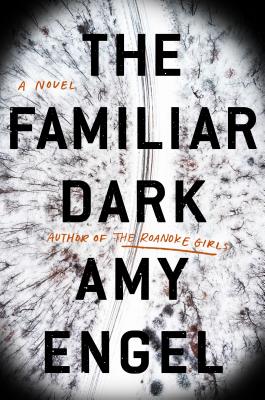
The Familiar Dark – Amy Engel

Last year I read Amy Engel’s novel The Roanoke Girls and I really loved it. Her novel The Familiar Dark is equally compelling and I read it in one sitting.

The Familiar Dark opens with a double homicide. When small town cop, Cal, comes to the diner to tell his sister Eve that her daughter, twelve-year-old Junie and her best friend Izzy have been murdered, Eve is bereft. Junie is Eve’s whole world. They are a team; only Cal has ever been invited into their private world.

Cal and Eve’s childhood is something they have worked their whole lives to escape. The siblings were raised “in a double-wide that stank of men and meth burners…strange faces and too much laughter, most of it jagged and mean. All of it nestled in the armpit of the Ozarks.” Their town is a backwater, where everyone knows your business and Eve wonders if the inept sheriff will ever find out who killed her daughter, so she takes her mother, Lynette’s advice: “You find him, Eve. Whoever did this. You find him. And you make him pay.”

Engel travels some pretty dark roads in The Familiar Dark. Although Eve has worked hard to live a different kind of life and raise her daughter away from the negative influences she’d had, including her mother, who she’s mostly avoided for the past decade, her questions necessarily suck her back into the “familiar dark” of her past.

For example, she must confront her former boyfriend (and I use the term loosely) Jimmy Ray, a local meth dealer.

I’d known what he was because I wasn’t blind. But I’d still fallen for the dark hair and green eyes, the lopsided grin, the tiger tattoo curled around his neck. The scent of danger he wore like cologne. When I was with him, I felt like the old Eve, the one who had flirted with disaster and never cared about how much something might hurt.

The Familiar Dark is almost un-put-down-able. Eve’s past has hardened her; Junie was the person who had smoothed out her rough edges. Engel leads the reader and Eve down a dark path, where Eve is forced to ask questions she may not want the answers to. There are some true surprises along the way and the ending is devastating.

Highly recommended.

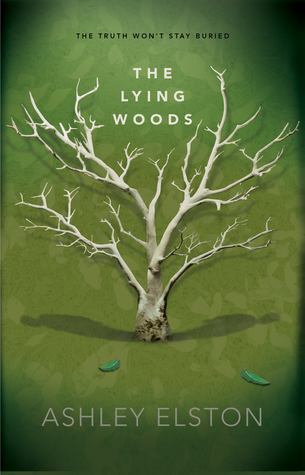
The Lying Woods – Ashley Elston

Owen Foster has it all going on. He’s a high school senior at an exclusive private school in New Orleans and his parents are loaded. His life has been pretty sweet. That is until his mother shows up one day to tell him that he has to come home to Lake Cane because his father has been accused of stealing from the very company that provided Owen with his privileged life and also, he’s missing.

This is just part of the story in Ashley Elston’s compelling YA mystery The Lying Woods. The second narrative happens twenty years in the past when nineteen-year-old Noah arrives in Lake Cane looking for work at Gus Trudeau’s pecan farm. Noah hasn’t had an easy life, but he’s hoping to turn things around and despite Gus’s warning that he’ll put a bullet in him if he steps out of line, Noah is convinced that he can make something of himself here. When he meets Maggie, he’s sure of it.

Readers will have a great time trying to figure out how these two timelines are related, but the best thing about Elston’s novel is that both stories are interesting all on their own. For Owen, he’s trying to figure out if the things that his father is accused of are true. The company his father ran, Louisiana Frac, employed a lot of people in the small town, and what his father did has left a lot of them without a job, or worse, without their life savings. People are suspicious of Owen’s mother, convinced that she knew what her husband was up to and even has some of the missing money. When Owen has to finish his senior year at the local high school he discovers that he doesn’t really have any friends with the exception, perhaps, of Pippa, his best friend when he was a kid. She, at least, seems willing to give him the benefit of the doubt.

Noah is the proverbial kid from the wrong side of the tracks. As his relationship with Maggie develops, he is not unaware of the complications their relationship presents. But he is willing to do whatever it takes to make a life with her. But it seems Noah can’t catch a break. I was really rooting for things to go his way, too.

Although this is classified as YA, it actually has a lot to offer adult readers. The writing is as good as any you’d find in an adult mystery; the characters are believable and sympathetic; the mystery is twisty enough to keep you guessing. I haven’t ever read this author before, but I would certainly like to read more.

Bloodline – Jess Lourey

I read Jess Lourey’s Unspeakable Things a few months ago and really enjoyed it so I was looking forward to reading Bloodline. It wasn’t quite the same reading experience, but it was a quick, enjoyable read nonetheless.

Joan Harken, a journalist, moves to Lilydale, Minnesota with her boyfriend, Deck. The impetus for trading big city life for small town living was a recent mugging, which left Joan shaken up and afraid, especially since she’s pregnant. Deck assures Joan that “Lilydale was peaceful, friendly. Everyone knows everyone, looked out for one another, The world outside might scream and swirl like a tornado, but Lilydale floated in a bubble, outside of time, as safe as a smile.”

It won’t take readers very long to figure out that Lilydale has some seriously creepy Stepford-vibes. We’re seeing things through Joan’s eyes – and let’s not forget she’s trained to be observant and ask questions. First there are the people who live on Mill Street, the street where Deck and Joan are to live in Deck’s childhood home. The town Mothers and Fathers give off definite cult-vibes. Then there’s the fact that everyone in Lilydale seems to know her business. As Deck’s father tells her “You have to understand how a small town works. We’re a big family here. You don’t keep secrets from family.”

Well, it turns out, you can keep some secrets and there are a lot of them in Lilydale. Some of those secrets have to do with Paulie Aandeg, a little boy who disappeared from his kindergarten class on his first day. Although it happened decades ago, the child was never found and later his mother’s house burned to the ground and she disappeared, too. When someone claiming to be Paulie turns up in Lilydale, Joan feels like she’s landed on the story of a lifetime. Unfortunately, she discovers, people in Lilydale aren’t all that forthcoming with information. As Joan’s investigation heats up, she feels more and more like people are watching her – not watching out for her as you might reasonably expect in a small town, but literally spying on her. When she starts to feel as though her life and the life of her unborn baby might be in danger, she becomes even more paranoid.

It’s interesting reading a story set in the sixties. Joan’s doctor allows for four cigarettes a day and that reminded me of an old Dr. Spock pregnancy book I found years ago. His recommendation: limit drinking to two cocktails a day and cigarettes to half a pack. Imagine. There are jellied salads, crème de menthe and Peter Pan collars galore.

Bloodline is a super-quick read. It’s straight-forward, page-turning fun.

All the Beautiful Lies – Peter Swanson

Harry Ackerson’s father, Bill, is dead. He’s only just found out and he has to leave college (he’s just about to collect his diploma) and head to Kennewick Village, Maine, where his father lives with his second, much younger wife, Alice.

She was a strange kind of beautiful, her eyes set too far apart, her skin so pale that you could make out the blue veins right near the surface. She reminded Harry of one of those hot alien races from Star Trek, a beautiful female who just happened to have green skin, say, or ridges on her forehead. She was otherworldly. Harry found himself in a state of constant, confused sexual turmoil, guiltily obsessing over Alice.

Harry’s arrival in Maine is fraught. Alice is distraught. Their house, known locally as the Grey Lady, has never been home to Harry. It’s filled with his father’s things. His father owned a rare bookstore in the village, and Alice is hoping Harry will stick around and help John, the store’s lone employee, run the place.

Things get complicated with the arrival of Grace, a young woman Harry’s age who seems to have some connection to his father, and the news that Bill’s death might not be an accident after all. This is the general story line in Peter Swanson’s novel All the Beautiful Lies. Of course, things are a lot more twisty than this.

Alice and her mother moved to Kennewick when she was fourteen. Her mother, Edith, had won a settlement from the Saltonstall Mill for a workplace accident which had nearly killed her. The move is supposed to be a fresh start, but there’s no hitting reset on Edith’s drinking. When Edith meets and marries handsome banker Jake, Alice almost can’t believe her good luck.

Swanson’s novel flips between then (Alice’s story) and now (what exactly happened to Bill), and the way that these two stories coil around each other is one of the novel’s pleasures. When someone else turns up dead, Harry finds himself caught in the a maelstrom of lies. (Whether or not they are beautiful will be up to you to decide.)

This is my second book by Peter Swanson (The Kind Worth Killing) and I am solidly a fan now.

One of Us Is Next – Karen M. McManus

Well, my second YA novel by Karen M. McManus caps off my 2020 reading year, and has the distinction of being my 86th book. I thought when I set my 2020 challenge at 75 I was being optimistic, and then Covid happened.

I read McManus’s book One of Us Is Lying this summer and I really enjoyed it. One of Us Is Next is a sequel of sorts as some of the characters from the first book make an appearance in this one, too. (Bronwyn & Nate!) Eighteen months after Simon’s death (first book), students at Bayview High School find themselves under attack by someone who entices them to play a game of Truth or Dare. It’s clear that whoever this is, they knows some pretty dark secrets and they’re not afraid to share them. As one student says, “Always take the Dare.”

Phoebe, Knox and Maeve narrate this story. Phoebe is the first victim of the game and the secret revealed about her has a damaging ripple effect. Maeve (Bronwyn’s younger sister) refuses to play, and her punishment is to have a secret revealed which damages her friendship with former boyfriend now bestie, Knox. Things take a decided turn for the worst when a students accidently dies.

McManus juggles the different perspectives and all sorts of other teenage drama while moving the mystery along. Alliances are made and broken. There’s some swoon-worthy romance (those Rojas sisters are lucky in love), and there’s also some commentary about slut shaming, bullying and just how clique-y high school can be. It’s clear that McManus cares deeply about these characters and she has a real ear for how teens talk.

This is another fun page-turner by a YA writer worth reading.

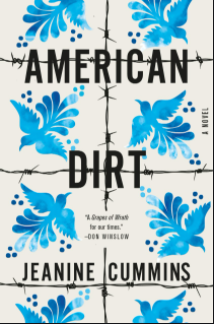
American Dirt – Jeanine Cummins

The debate rages on: does an artist have the right to create something even though it is outside of their lived experience? My answer is always going to be yes, otherwise how do I justify the ten-plus years I wrote vampire fanfiction? I mean, I’ve never met a vampire let alone had sex with one. Jeanine Cummins found herself in the middle of a maelstrom after the release of her novel American Dirt.

Vulture magazine did a whole piece tracing the controversy about the book which “has been called “stereotypical,” and “appropriative” for “opportunistically, selfishly, and parasitically” telling the fictional story of a Mexican mother and son’s journey to the border after a cartel murders the rest of their family.” The entire article is worth the read because it explains the whole situation much more succinctly than I could.

One of the very first bullets comes in through the open window above the toilet where Luca is standing. He doesn’t immediately understand that it’s a bullet at all, and it’s only luck that it doesn’t strike him between the eyes.

Thus begins the story of Luca, 8, and his mother, Lydia. At a family barbecue to celebrate Luca’s cousin Yenifer’s 15th birthday, the entire family (with the exception of Luca and Lydia) are gunned down. It is immediately apparent to Lydia who is responsible. Her husband, Sebastian, is a journalist and he has recently published a piece about Javier Fuentes, the most powerful drug lord in Acapulco. Javier and Lydia had also become friends, not lovers exactly, but there is definitely an intimacy between them born from their love of literature. (Lydia owns a bookstore.) Lydia had no idea who Javier was when she met him; she saw him only as a kindred spirit, someone with whom she could talk “about literature and poetry and economics and politics.”

It was just as Lydia had always hoped life in her bookstore would be one day. In between the workaday drudgery of running a business, that she would entertain customers who were as lively and engaging as the books around them.

Javier’s cartel, Los Jardineros aka The Gardeners, earned their name because they “used guns only when they didn’t have time to indulge their creativity. Their preferred tools were more intimate: spade, ax, sicle, hook, machete. The simple tools of hacking and trenching.”

After the massacre, Lydia takes Luca and runs. She has no choice; she knows that Javier will not rest until she and her son are dead too. The novels traces their arduous journey from their ruined home to the United States, seen here as a beacon of freedom and hope – but, of course, knowing what we know now about undocumented immigrants, perhaps not so much. Still, Lydia feels as though she has only one choice and so they run.

Of course, what does a middle-class business owner know about fleeing under the radar? Not too much. I think the book expects us to believe that because she is protecting her son, she is willing to do just about anything. She’s a quick study because she has to be. She doesn’t dwell too long on the fact that she didn’t see the red flags waving around Javier; she trusts her gut now as the two make their way to el norte.

It’s a gruesome trip. Lydia knows that the cartel has eyes everywhere and that Javier won’t stop until he finds them. Along the way, they meet other migrants with stories of their own. Sisters Soledad and Rebeca are particularly sympathetic.

I enjoyed the book. I guess that’s my white, middle-age, privilege talking, but I found it hard to put down. Criticism claims that there are many inaccuracies, and of course I couldn’t tell you what they are. All I can tell you is that I was wholly invested in Lydia and Luca’s journey and that I tore through the book.

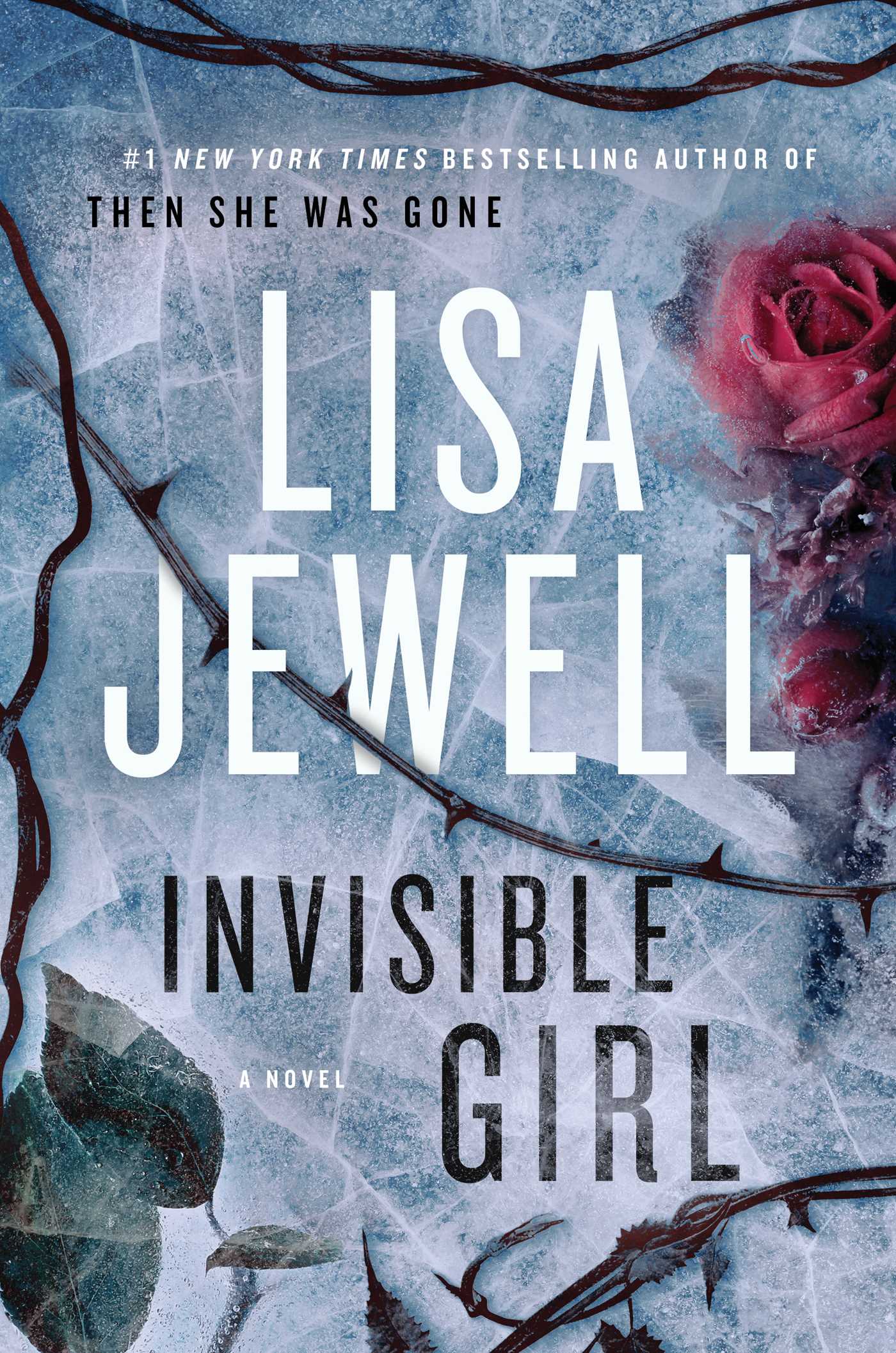
Invisible Girl – Lisa Jewell

I can always depend on Lisa Jewell to deliver a well-written, page-turning, character-driven book. She’s the perfect author to read if I am ever experiencing a book slump. I have read several of her books (The Family Upstairs, The Girls in the Garden, I Found You, Watching You) and I haven’t been disappointed once.

Invisible Girl is the story of a group of people whose lives intersect when seventeen-year-old Saffyre Maddox disappears. Saffyre’s life has been touched by tragedy; most recently her beloved grandfather has died, but before that there was an incident of abuse that resulted in some therapy. Her therapist was Roan Fours. Fours lives with his wife, Cate, and teenage children, Georgia and Josh, in Hampstead. They’re renting a flat while their house is being repaired due to land subsidence. This flat is across the street from an old mansion, now flats, where Owen Pick lives with his Aunt Tessie. These are the main players in Jewell’s story, told from Saffyre, Cate and Owen’s points of view.

Saffyre is the invisible girl of the title because once Roan considers her “cured” and cuts her loose from therapy, she finds herself somewhat fixated on him. She starts following him around. She’s stealthy, pulling up her hood and disappearing into the shadows. She has mastered the art of being invisible, literally, but also figuratively. She hides things from the one person who loves her most, her Uncle Owen, with whom she lives. She doesn’t let people into her life; on the outside she seems well-adjusted, successful in school, etc, but inside she is still tortured by what happened to her when she was ten.

Saffyre isn’t the only invisible character in this novel, though. Roan’s wife, Cate, is also invisible. She’s a physiotherapist who “gave up her practice fifteen years ago when Georgia was born and never really got back into treating patients.” She acknowledges the twenty-five-years of her marriage as a “hazy tableau of a marriage at its midpoint….with likely another twenty-five years to go.” She also admits that her husband “hates her. She knows he does. And it’s her fault.” Only her son, Josh, provides her with any real comfort. He seems like the perfect kid, thoughtful and loving. Of course, he’s got secrets, too.

Owen Pick, the poor sod across the street is also invisible. He teaches computer science at the local college, and he seems exactly as you might imagine a 33-year-old computer geek: friendless, awkward, and a virgin. He’s not even allowed into the living room in his aunt’s flat. When he is suspended because of the accusations of some of his students, Owen’s life hurtles out of control. When it turns out he was one of the last people to see Saffyre, he quickly becomes a suspect in her disappearance. His bewilderment leads him to the internet, where he stumbles across information about incels, and that rabbit hole leads to no good.

The stories shock him at first, but then the shock recedes into a kind of numb acceptance, a sense that he’d always known this about women. Of course. Women lie. Women hate men and want to hurt them. And what easier way in there to hurt a man than to accuse him of rape?

In true Lisa Jewell fashion, you won’t know who to believe until the plot unravels. Like always, I was happy to go along for the ride.

Unspeakable Things – Jess Lourey

Cassie McDowell, the narrator of Jess Lourey’s riveting novel Unspeakable Things, confronts her memories of her thirteenth summer when she returns to her small Minnesota hometown for a funeral. She alludes to writing a novel about a “gravedirt basement”, but now “that cellar stink doubled back with a vengeance.”

It’s the 1980s and Cassie lives with her older sister, Sephie, and her parents on a thirteen acre hobby farm. Her father, Donny, is an artist and her mother, Peg, a teacher. It doesn’t take very long to feel the sense of dread that permeates Cassie’s home life. She “felt a quease leaving [Sephie] up with [her parents] when they’d been drinking” and she sleeps either under her bed, or squirreled away in her bedroom closet. The basement of their farmhouse is off limits. The tension is almost unbearable.

Their town, Lilydale, is full of strange characters, like Sergeant Bauer, the local cop, and Goblin, the creepy guy who lives down the road from the McDowells. And then, boys start disappearing. This causes the town to invoke a 9 p.m. curfew, which does little to alleviate fear.

That sent a shiver up my spine. First, what Betty had said this morning about the boy being raped, and now this. Mom’d told us on the drive over that we didn’t need to worry about anything, but Betty had most definitely seemed concerned. Bauer did, too. He suddenly had our complete attention.

“Always travel in pairs. I don’t want to see ay of you kids out alone this summer.”

That shushed us all up, every last one of us.

This time it wasn’t the words, or even his tone.

I think it was the first moment we caught a whiff of what was coming for us.

Something is coming for the boys of Lilydale, and when it comes for Gabriel, the cute boy Cassie has a crush on, she decides to do some investigating of her own. But, make no mistake, this isn’t a light-hearted Nancy Drew-esque detective story. There are creepy-crawly things in Lilydale’s underbelly and in Cassie’s own home. In fact, there is so much to be worried about the dread quotient is off-the-charts.

Yes, someone is scooping boys off the streets and when they come back they are changed in ways they seem unable to articulate. But Cassie has to deal with what is going on in her own backyard: her father’s mercurial moods, her parents’ ‘parties’ and the implied sexual abuse going on her home. When her father’s footsteps start up the stairs, the terror Cassie – and surely the reader – feels is palpable.

Unspeakable Things is a mystery and a coming-of-age story, and all of it (and Cassie’s voice) will twine around your heart and squeeze hard. Some might find the end of this novel less-than-satisfactory. Lourey wrote an epilogue, but then left it out of the final version. You can read that here. I liked both versions.

I loved this book. Highly recommended, but potentially triggering.

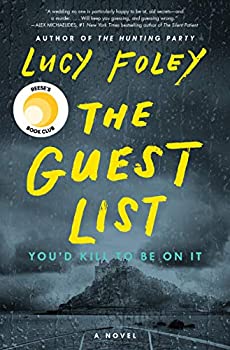
The Guest List – Lucy Foley

Lucy Foley’s thriller The Guest List is the perfect book to pick up if you’ve got a couple hours and you want to be distracted. Although I didn’t find the writing to be spectacular (do people not care about comma splices anymore?) and the twists weren’t necessarily twisty (once you see one, the house of cards starts to crumble), I still thoroughly enjoyed my time on Innis an Amplora or Cormorant Island.

Jules and Will (a digital magazine editor and a reality tv star) are getting married and they’ve decided to hold the exclusive event on Cormorant Island, located in the Atlantic, off the coast of Ireland. There’s nothing much on the island now, except for the Folly (aptly named as it turns out), a few crumbling buildings, a graveyard and a peat bog. To this event they’ve invited 150 or so of their closest friends, but the people who really matter come the day before.

There’s Hannah, wife of Charlie, who’s Jules’s best friend. Hannah’s quite aware that she and Jules are “the two most important people in [her] husband’s life.” There’s Johnno, Will’s best friend and best man. The two men went to an exclusive boarding school called Trevellyan. There’s Olivia, maid-of-honour and Jules’s half sister. Finally there’s Aiofe, wedding planner and owner of the Folly with her husband Freddy. Each of these people, and Jules, reveal their feelings about the event and the people in attendance in first person narratives. The book jacket tells us that one of these people is a murderer, although we don’t find out until the very end who has actually been killed.

Years ago, I read Agatha Christie’s magnificent “locked room” mystery (although at the time, I’m not sure I knew that’s what it was called) And Then There Were None. The “locked-room” or “impossible crime” mystery is a subgenre of detective fiction in which a crime (almost always murder) is committed in circumstances under which it was seemingly impossible for the perpetrator to commit the crime or evade detection in the course of getting in and out of the crime scene.[1] The crime in question typically involves a crime scene with no indication as to how the intruder could have entered or left, for example: a locked room. Following other conventions of classic detective fiction, the reader is normally presented with the puzzle and all of the clues, and is encouraged to solve the mystery before the solution is revealed in a dramatic climax. (From: https://en.wikipedia.org/wiki/Locked-room_mystery).

The Guest List isn’t totally a “locked room” mystery, but I think Foley does owe a debt of gratitude to Christie. And to every unreliable narrator on the planet. Every one one of the guests who arrive early on the island have something to hide. Secrets are alluded to. Friendships fray. Relationships strain. And it’s all enormous, mindless fun.