 Although I really don’t know very much about gaming (my gaming experiences consist of playing PacMan and Asteroids at the local pin ball joint, and then a few years later staying up all night to play Scorched Earth), I do understand the appeal of an on-line persona. During my years in fandom, I had a fake name for all the fanfiction I wrote, and I met loads of other people (mostly women) who wrote fic in their spare time: mothers and teachers and lawyers and even a judge. While my persona was very much me, having met some of these ladies in real life, I know that many of them were more daring, outgoing, over-the-top online compared to the way they were in their every day lives. That aspect of Cory Doctorow and Jen Wang’s graphic novel In Real Life was familiar to me.
Anda has recently moved from California to Arizona with her parents. She hasn’t really settled in, except with the boys who play D & D, and so when Liza McCombs shows up in her computer class to invite girls to play Coarsegold, a first person game for girls only, Anda jumps at the chance. (This is the point where I admit that I don’t really know much of anything about this sort of thing.)
Anda creates an avatar, Kalidestroyer, befriends another player, Sarge. Sarge recruits Anda to “kill some guys.” (Virtually, of course.) The guys Sarge wants Kalidestroyer/Anda to kill are gold miners, players who “collect items for gold and sell the gold to other players for cash.” Someone who actually games will probably understand the mechanics of this better than I did, but eventually Anda comes across one of these gold farmers and instead of killing him, she starts to talk to him. Turns out, he’s a boy from China.

Doctorow says in In Real Life ‘s Introduction that he hopes readers will “be inspired to dig deeper into the subject of behavioral economics and to start asking hard questions about how we end up with the stuff we own, what it costs our human brothers and sisters to make those goods, and why we think we need them.” Doctorow believes that while the Internet doesn’t necessarily solve the injustices of the world – which we can all agree are many – it “solves the first hard problem of righting wrongs: getting everyone together and keeping them together.”
As Anda’s gaming life spills over into her real life, it’s easy to see the point Doctorow is making. This is a worthwhile book for gamers and anyone interested in justice.
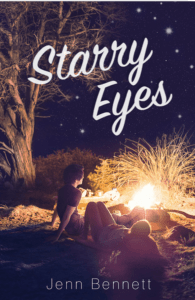 Starry Eyes ended up being a sweet love story with believable main characters.
 Seventeen-year-old Ruth Carver has a nickname on the show-riding circuit: Ruthless. She earned the name by being single-minded when it comes to competitions, but it’s more than that. At the ranch, it’s “sink or swim” and Ruth lives by that motto. Ruth also understands that her success in the ring will benefit her parents’ struggling ranch. She’ll do whatever it takes to win, even if that means pushing other people away from her. That includes Caleb, the boy who loves her.
 Although I teach high school English and although Chris Lynch is a prolific writer of award-winning YA literature, his novel Inexcusable is the first of his books I’ve read. This particular novel was a National Book Award finalist, as well as top of many other “Best of” lists. School Library Journal called it “A finely crafted and thought-provoking page-turner.”
 seventeen-year-olds, but that doesn’t mean that they’ve given up on living. Their singular voices will likely strike a nerve with many young readers.
 I don’t think I have ever read a book quite like Frances Hardinge’s YA novel Cuckoo Song. I am not much of a fantasy fan, you know – word building and that sort of thing, but I was totally enchanted by Hardinge’s story, which is as much about grief and loss, as it is a creepy story about…well, I can’t really tell you.
 Greene is dead.
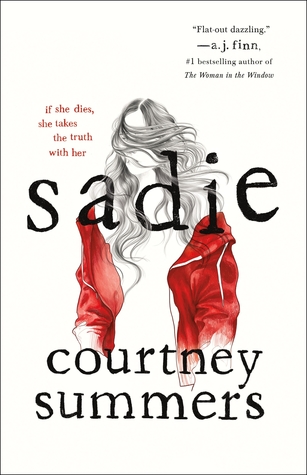 I thought if I waited a few days after finishing Courtney Summers’ latest book Sadie, I would have a better chance of articulating my feelings coherently. Sadly, I don’t think I am actually going to be able to adequately express all the ways I loved (and hated) this book.
 different worlds. Claudia lives with her stable and loving parents; Monday lives with her single mom and three siblings in Washington’s Ed Borough Complex, a part of town Claudia isn’t allowed to visit without an adult.
 Jam Gallahue just hasn’t been able to recover from the death of her boyfriend Reeve Maxfield. “I loved him,” she explains, “and then he died, and almost a year passed and no one knew what to do with me.” As a last resort, Jam’s parents send her to The Wooden Barn, “a boarding school for ’emotionally fragile, highly intelligent’ teenagers.”
 The Ludic Reader