
Not all YA books are created equal. When I was a teen in the 70s YA was barely a thing. Basically I went from reading The Bobbsey Twins and Trixie Beldon to reading Jane Eyre and A Tree Grows in Brooklyn. The Scholastic flyer at school offered some options and I can  specifically remember reading and falling in love with S.E. Hinton’s That Was Then, This is Now (a book I loved way more than I loved The Outsiders), and Judy Blume’s Forever, but the reading choices certainly weren’t as varied as they are for teens today. I read a lot of YA now because I teach teens. Lots of it is mediocre. Lots of it is good. Then, every so often, you read a book you just want to tell all your students about. You want every single teen you know on the planet to read it. Jennifer Niven’s All the Bright Places is one of those books.
Theodore Finch is seventeen. He begins his story by asking “Is today a good day to die?” He’s considering this question from “a narrow ledge six floors above the ground.” That’s when he sees the girl, Violet Markey. “She stands a few feet away on the other side of the tower, also out on the ledge…”
This is how Niven begins to tell the story of Finch and Violet. Finch ‘rescues’ Violet, but because he has a reputation as being a freak, a loser, and unstable, the rumour around school is that Violet saved him. From this unlikely scenario, a beautiful friendship springs.
After Finch talks Violet off the ledge he asks her: “Do you think there’s such a thing as a perfect day?…A perfect day. Start to finish. Where nothing terrible or sad or ordinary happens. Do you think it’s possible?” Just typing that now makes me feel as though I want to cry.
Violet doesn’t seem like a likely match for Finch. She’s “cheerleader popular” and dates Ryan Cross, a movie star handsome baseball star. Still, when the two are paired to participate in a “Wander Indiana” project (part of a course in U.S. Geography), they discover a kinship neither expected. As they travel to various points of interest, they start to trust each other. Violet begins the painful process of shedding the grief of a tragic accident and Finch finds more and more reason to stay “awake.”
One of the things that makes a YA novel great for me is characterization. I want the teens to feel authentic, not like stereotypes. Finch and Violet are beautifully crafted creations, and the people who circle their lives (parents and siblings and friends) are also well-drawn and nuanced. Finch’s mom is broken from her failed marriage; Violet’s parents are over-protective. As a mom of teens myself, I like to see parents in YA portrayed as real people – flawed and messy and trying to do the best they can even when they can’t fix anything at all.
The other element of the novel that Niven handles so well is the issue of mental illness. All the Bright Places is not a “sick lit” book. Finch’s struggles are authentic and nuanced and painfully rendered in prose that is a joy to read. I can’t remember the last time a character has broken my heart, but Finch most certainly did.
I can’t recommend All the Bright Places highly enough. Buy it for every teen you know. Buy it for yourself.
 keep attentive readers on their toes. The straight-forward narrative and familiar characters (the mean girl, the jock, the good girl) will certainly be appealing to readers of a certain age, but there isn’t much on offer here for anyone else.
 For the young reader on your list:
 For anyone who likes poetry:
 Finally, plan for next year and order:
 I have to admit that I was feeling a little smug because, y’know, I’m Canadian and Justin Trudeau is our Prime Minister. He’s not perfect, certainly, and we’re not perfect as a nation, but c’mon. And then Kellie Leitch, one of the people running for the leadership of our national Progressive Conservative Party (as if the national PC Party is actually ‘progressive’) hitched her star to Trump’s wagon saying we needed to vet our immigrants more carefully. Seriously? I blame Stephen Harper for creating a climate where someone could say something like that in a country that was freakin’ built by immigrants. (Okay, truthfully, I blame Harper for lots of things; I just don’t like the man.)


 Liesel is extraordinary. She and Hans bond late at night, when Liesel’s nightmares wake her, and Hans teaches her to read. Books and words are central to Liesel’s story. So is her friendship with Rudy, the boy next door. Through their eyes we see Hitler and Nazi Germany; we experience the atrocities and the small kindnesses. Zusak’s story is mostly about everyday things: hunger, pettiness, laughter, hope, cruelty and kindness.
 Totally Joe
 Everything I Never Told You
 Morwenna draws us into a gothic landscape where people use language with scalpel-like precision and the characters are not particularly sympathetic.
 love her because she’s, you know, Canadian. Like Ryan Gosling is Canadian. And ketchup chips. Okay, now I am just putting off talking about All The Rage because reading Summers isn’t like reading other YA writers. She hits you hard right in the solar plexus. Every. Time.
 The Giver takes place in a community that values Sameness. On the surface it might even appear like a Utopia. Eleven-year-old Jonas lives in a family unit lives with his younger sister, Lily, and his mother and father. None of them are biologically connected. His life is structured around school and volunteering and ceremonies that mark the important moments in the lives of the citizens. He is apprehensively waiting the next ceremony. His mother tries to calm Jonas’s nerves by telling him
 talk, too. The book is based on the true story of California history teacher Ron Jones’ social experiment. (He’s been renamed Ben Ross in this book.) The year was 1969 and Ross had just shown his senior class a film about the Holocaust. When one of his students asked how the Germans could have just sat back and let the Nazis do what they did, Ross tried to think of a way he could illustrate the power of a fascist movement. He came up with “The Wave” and began to teach his students about discipline, community and action. Although the experiment was meant to be short-lived, it grew to include a salute, slogans and even a secret police force before it was finally dismantled due to complaints from parents and colleagues.
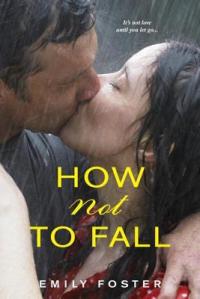 Enter How Not To Fall. Of course I’d seen this book at the book store, but I don’t think I even picked it up to read the blurb. Then I read a review – although I can’t remember where. The reviewer avoided comparisons with Fifty Shades, but did sing the book’s praises. Smart and hot — which is probably a pretty good combination. So, the next time I was at Indigo, I bought the book and now I’ve read it.
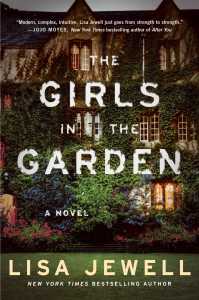 The Girls in the Garden is one of those books. Although it turned out to be not the book I thought it would be, it was a great read nonetheless.
 The Ludic Reader